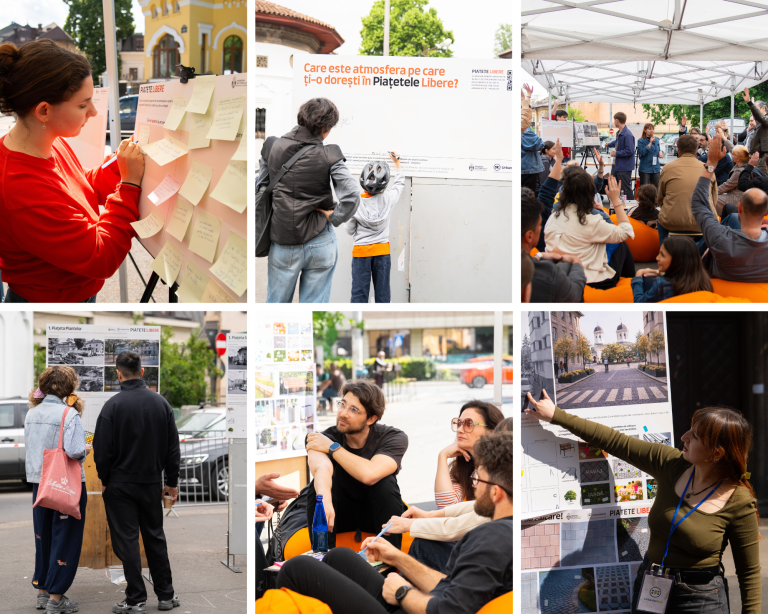

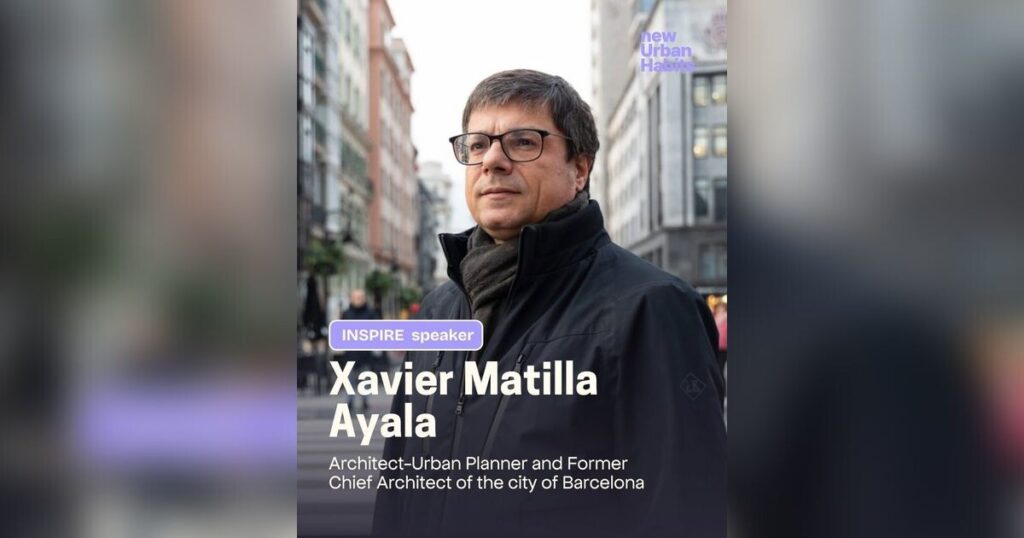
Ahead of New Urban Habits 2026 in Bucharest, the architect behind Barcelona’s green “superblocks” talks overtourism, cars, and why real change has to be visible on the street.
INSPIRE speaker · 20–21 June 2026 · Mihai Eminescu Amphitheatre, Bucharest
On 20 and 21 June, Xavier Matilla Ayala comes to Bucharest as an INSPIRE speaker at New Urban Habits, the festival dedicated to the future of cities. As an architect, urban planner and former chief architect of Barcelona, he helped turn streets that had been designed for cars into green axes for people. We spoke with him before the festival about what his city has solved, what it still hasn’t, and what cities in our part of Europe can take from its experience.
The risk of forgetting the good idea
This year Barcelona marks a milestone in the long story of the Sagrada Família, 144 years after construction began. It is the kind of project that once seemed natural — a commitment carried across several generations. For Matilla, the moment is less a celebration than a warning.
“Cities run the risk of losing sight of the good ideas that originally inspired them.”
“What Gaudí conceived as an expiatory temple, rooted in a spiritual and collective vision, has ultimately become a symbol of tourism promotion and of a way of understanding cities primarily as an economic business,” he says. It is a small story that contains a much larger one — about what happens when a city forgets who it is for.
Overtourism and the price of being a “model city”
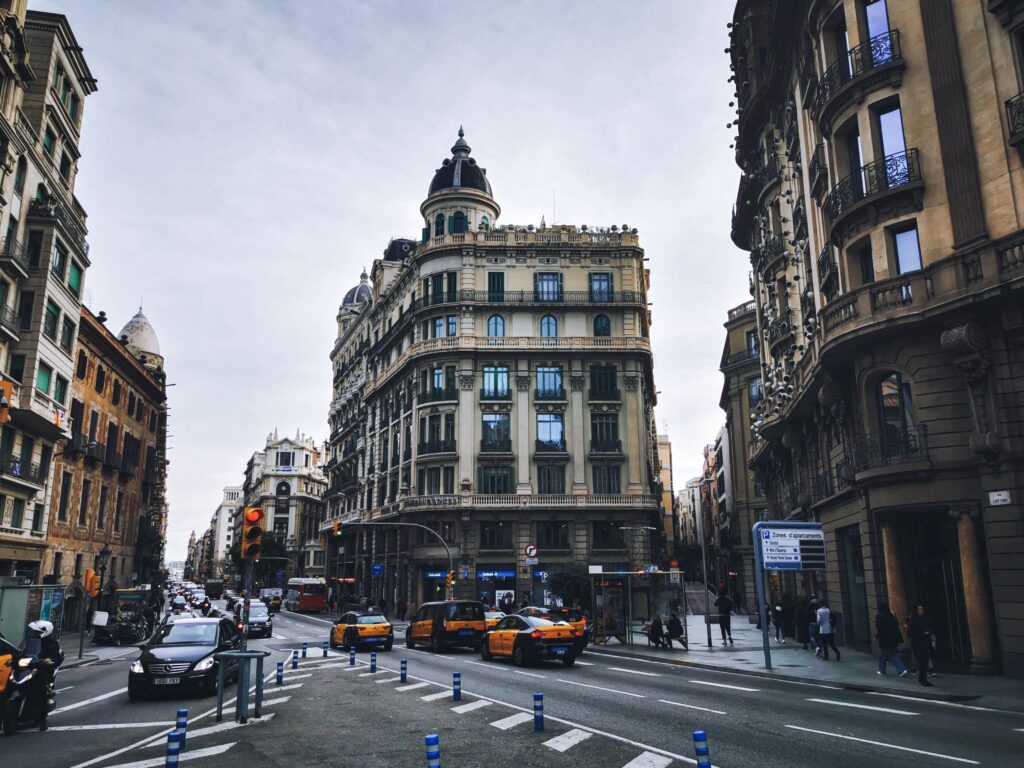
Barcelona is often held up as an example. Matilla is clear-eyed about what that label hides. The city’s “main and critical challenge,” he says, is the pressure of overtourism and the way it erodes something as fundamental as housing affordability.
“Many people in Barcelona can no longer afford to live in the city and are being forced to move elsewhere,” he explains. The same pressure drains neighbourhoods of local businesses, community activities and everyday life, “leaving large areas of the city increasingly empty of residents.”
It is not only a Barcelona problem — much of Europe faces the same squeeze. The lesson, he argues, is that governments must build public policies and regulatory tools to keep tourism compatible with local life. Asked what single thing he would change in Barcelona tomorrow, his answer is one line: “A drastic reduction in the number of tourists.”
Fewer cars, more freedom
Many cities in Eastern Europe — Bucharest among them — have grown around the private car over the past three decades. How do you convince people that fewer cars can mean more freedom, not less? Matilla says it takes two things, in order.
The first is better alternatives: “cycling networks, better pedestrian infrastructure, and a more balanced public transport system that reaches all neighbourhoods,” so that good public transport is something everyone in the city can actually use.
The second is, in his words, fundamental — and it is about speed and proof.
“When people can see for themselves that a traffic-calmed street with more greenery, more space for children’s play and for places to sit actually works — that is when they ultimately become convinced.”
Superblocks: resistance, and the will to finish
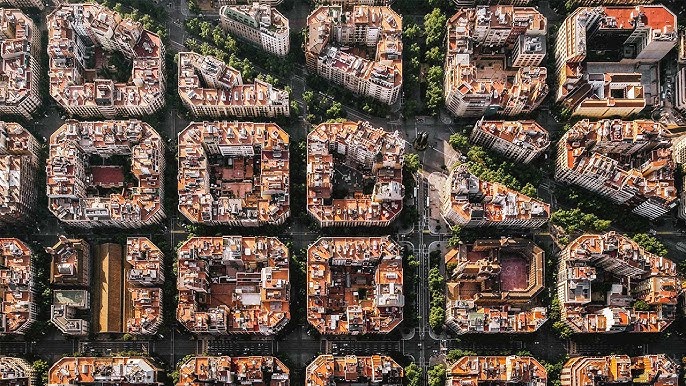
Barcelona’s Superilles (superblocks) have become a global reference. They also drew the resistance you would expect. The familiar fear, Matilla recalls, was that streets without cars would hurt commerce. In central Barcelona there was even a debate over whether turning car-only streets into green ones would damage the heritage landscape of the Eixample. His verdict on that argument is blunt: “Really crazy.”
The response was an intensive participatory process — sustained dialogue with local organisations and residents, detailed information, feedback collected and, in some cases, built into the projects. But he is honest about what mattered most: “the political will to carry out the project and bring it to completion.”
And once it was done? “While there are still some people who are not fully convinced, a vast majority of Barcelona’s residents — and especially those living in the transformed neighbourhoods — are now very satisfied with the new green axes.”
The multiscalar city
How can a city stay attractive to investment and tourism without becoming unaffordable or unliveable? Matilla believes in what he calls a multiscalar city — “global, metropolitan, and at the same time local, or grounded at a human scale.”
The way to hold those scales together, he says, is to set limits — chiefly at the global scale. “It is excellent to have globally significant cities, but each city must understand that there are boundaries that should not be exceeded, so that this global dimension does not undermine the human scale and neighbourhood life.” In practice that means capping tourism and tourism-driven commerce, and actively growing other kinds of economic activity so a city is never dependent on tourism alone.
The most common mistake
What do city leaders most often get wrong? For Matilla, it is a single misunderstanding with many consequences.
“Cities are made by people, and they only make sense insofar as there are people who live in them.”
Too often, he says, decisions are taken on economic, formal or even aesthetic grounds, “without sufficiently taking into account the circumstances of the people who not only live there, but also give meaning to any transformation or new urban space.”
When governments won’t move: the Bicibús
And when local governments seem unwilling or unable to act? “People can organise themselves and promote change from the street, from society itself,” he says — and Barcelona has a favourite example.
The Bicibús began when families from a city-centre school organised a cycling route so their children could ride to school together each morning. It started as a self-organised activity that the City Council later joined, helping with traffic management. Today, around 14 schools across Barcelona run a Bicibús every Friday. “It is an initiative that emerged from the social self-organisation of families in a school.”
What a resilient city looks like
In an age of climate change, housing crises and social fragmentation, what does a genuinely resilient city look like? Matilla offers three tests. First, it tends towards self-sufficiency — reducing what it consumes and what it wastes. Second, its physical form is adapted to climate change, and therefore more efficient. Third, and no less important, it moves towards socio-spatial justice: “a city that guarantees that all people living in it have access to basic urban rights.”
What gives him hope
Looking at the next generation of urbanists, architects and civic leaders across Europe, Matilla sees a “solid awareness” taking hold — of the need to adapt our cities to new climatic conditions, and to confront the social and spatial injustices already written into our territory. The task now, he says, is to turn that technical awareness into influence over the people who make political decisions.
Asked how he would like his own work to be remembered, twenty years from now, he points back to the green axes of the Superilla:
“The beginning of a new way of thinking about the city — one that places the needs of the people who live in it at the centre.”
A model, he hopes, capable of adapting to climate change and guaranteeing basic urban rights for everyone — including “the right of children and older people to use and enjoy public space.”
Catch him in Bucharest
He leaves at least one question open. Asked what Barcelona might learn from Bucharest, he chose not to answer in writing — promising, in effect, to take it up on stage. You can hear that answer in person.
Xavier Matilla Ayala speaks at New Urban Habits on 20–21 June 2026, at the Mihai Eminescu Amphitheatre in Bucharest. Entry is free, with prior registration at newurbanhabits.com.