
What happens when you remove the cars and simply leave the street to people?
On the weekend of May 9–10, as part of the Piațete Libere / Open Squares project, a section of Sfântul Ștefan Square was temporarily closed to traffic. For two days, the area became a car-free street, with no stage, no food trucks and no pre-planned artistic program.
It was simply a street freed from traffic. And people started using it.
A car-free street, but not a festival
In Bucharest, we have grown used to the idea that a street closed to traffic must come with something else. A stage. Music. Food trucks. A program. A list of activities meant to justify the fact that, for a few hours, cars are no longer the main focus. This time, we tested a different idea.
What happens if a street is simply cleared of cars and given back to people? No stage. No food trucks. No intense artistic program. No pressure to turn everything into a festival. Just a street, two days and a neighborhood invited to use it differently.
About the Open Squares project
The experiment took place as part of Open Squares (Piațete Libere), a project dedicated to reconfiguring a network of 10 small public squares in the Armenească – Moșilor – Plantelor area.
The project is currently in its preliminary consultation stage. It aims to transform a series of spaces that are now used mainly for transit, circulation or parking into more pedestrian-friendly places.
More specifically, the goal is to create spaces that are greener, clearer and better connected to everyday neighborhood life.
For two days, a section of Sfântul Ștefan Square became an open public space. We did not want to “fill” the street with a program. Instead, we wanted to see whether a car-free street can work even when it is not over-programmed.
In other words, we wanted to understand whether people need a spectacular reason to show up, or whether sometimes the simple fact that a space becomes available is enough.
What happened when the street was opened up
The answer came naturally, especially on the second day.
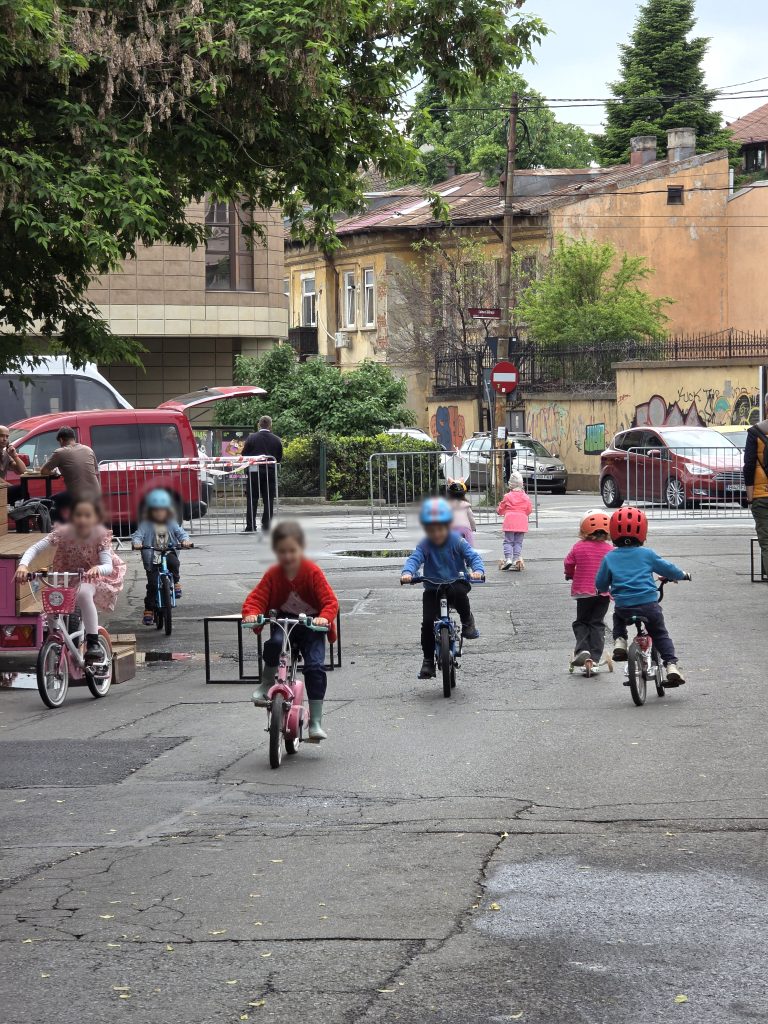
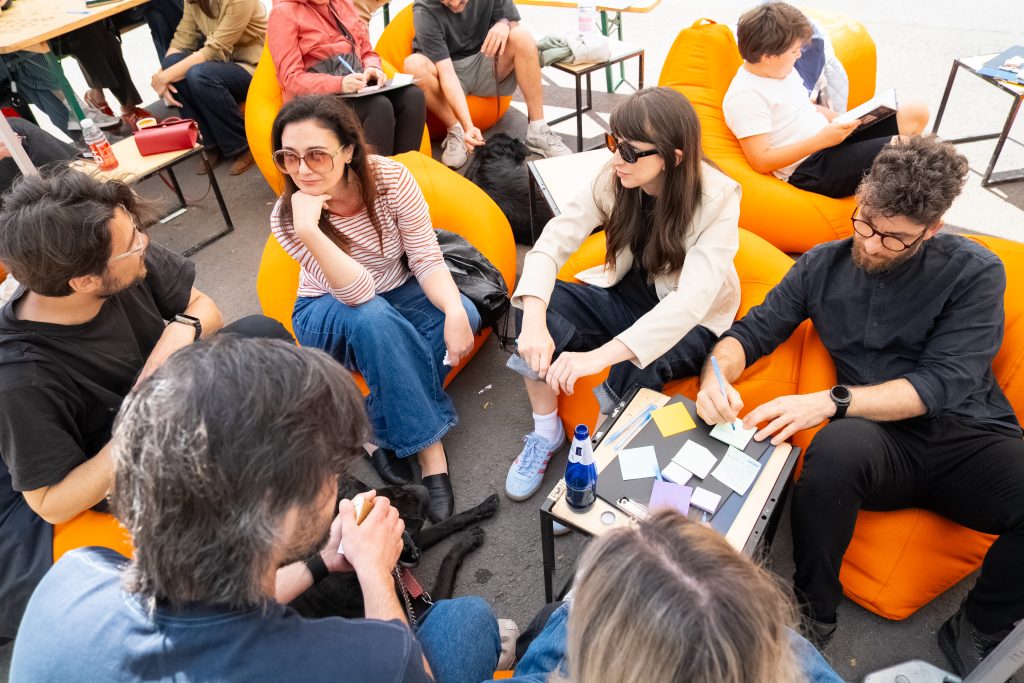
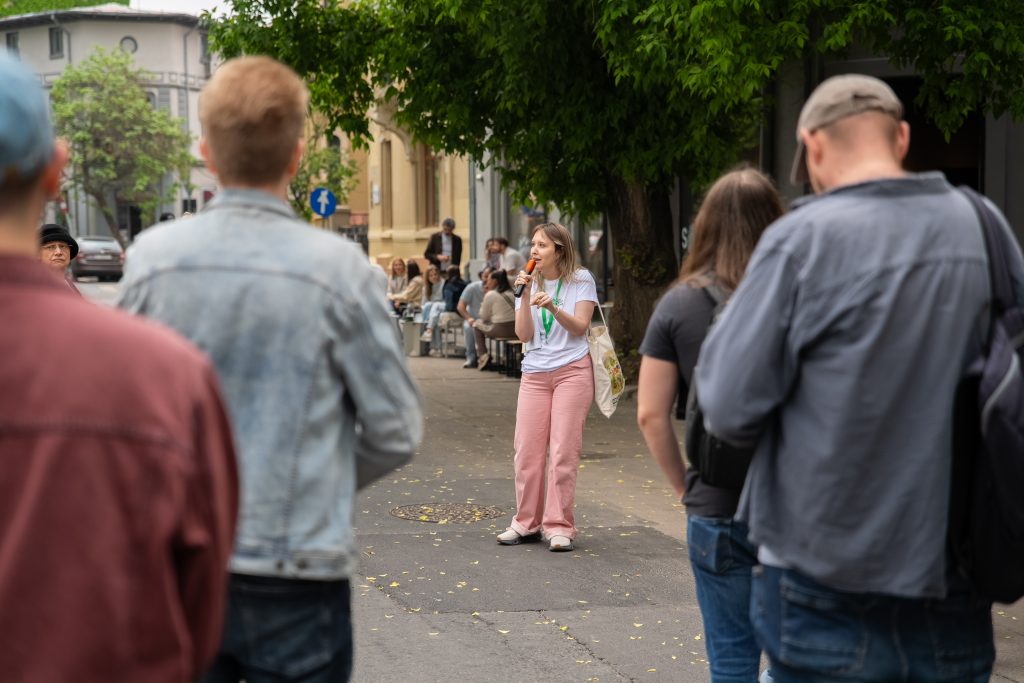
After word spread through the neighborhood, residents, people who regularly visit local businesses and families with children started to appear. The street was used simply, without instructions. It became a place for socializing, playing and relaxing.
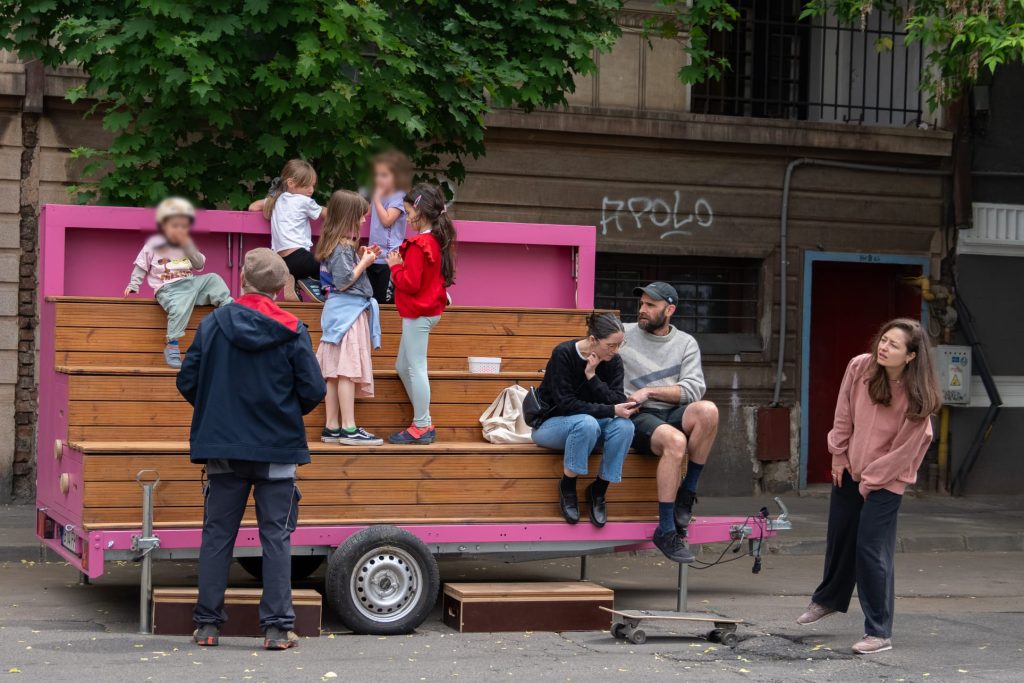
Children came with their bikes. They played football, jumped rope and drew with chalk on the asphalt. Adults talked, visited the exhibition and asked questions. As a result, for a few hours, people tested what a street without car traffic feels like, but also what it feels like without the noise and pressure of an overloaded event.
For a short time, the street was no longer just a corridor for movement. It became a place. A real public space.
Exhibition, renderings and direct conversations
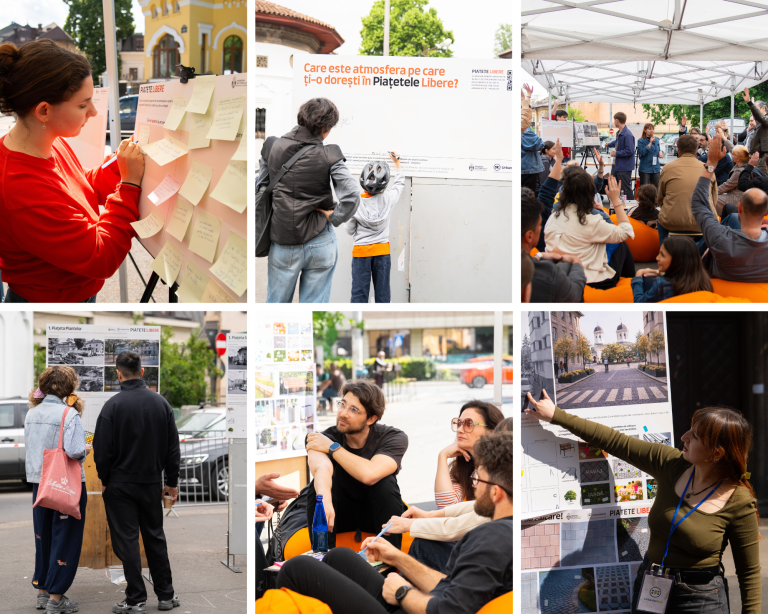
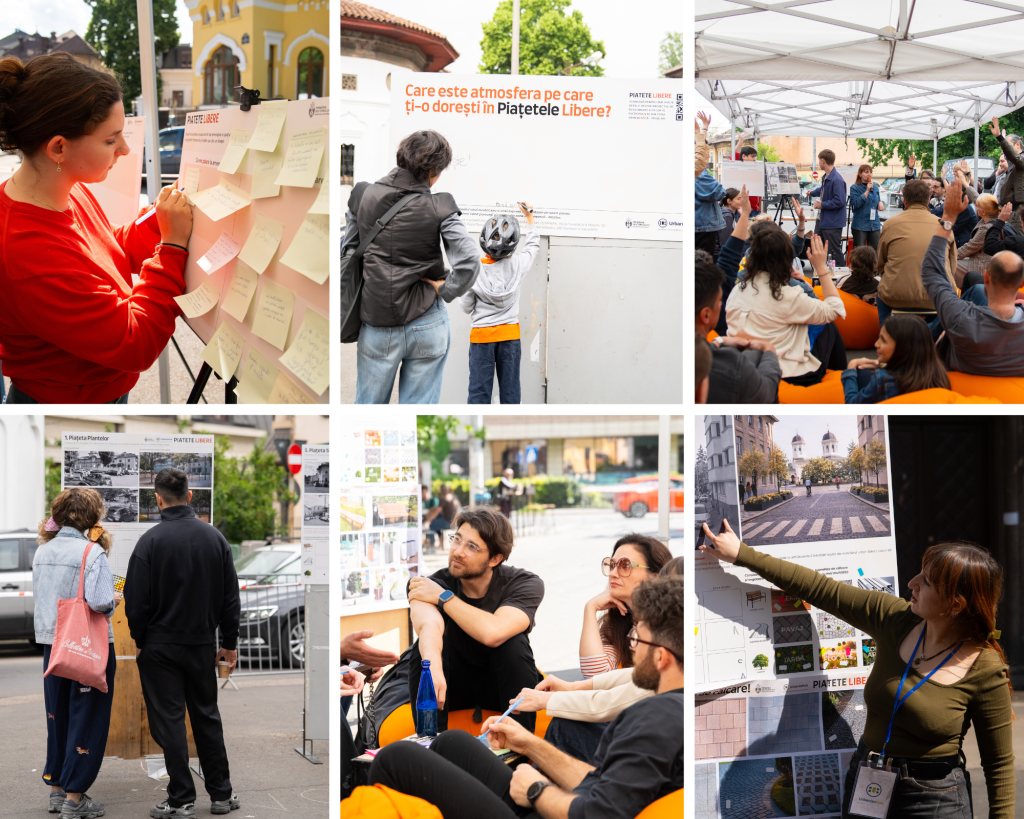
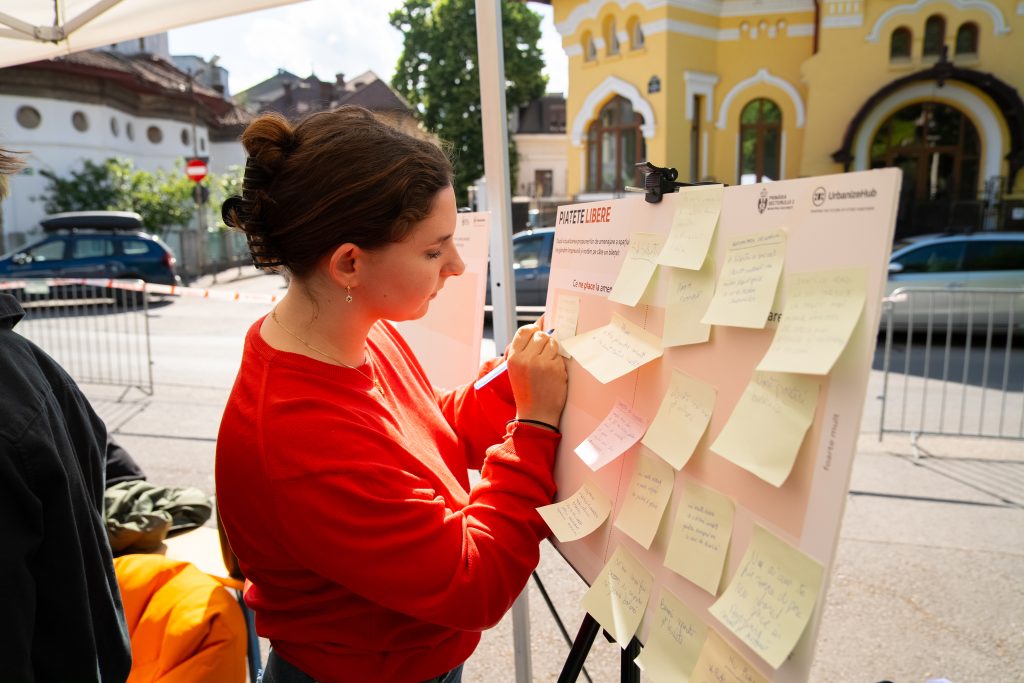
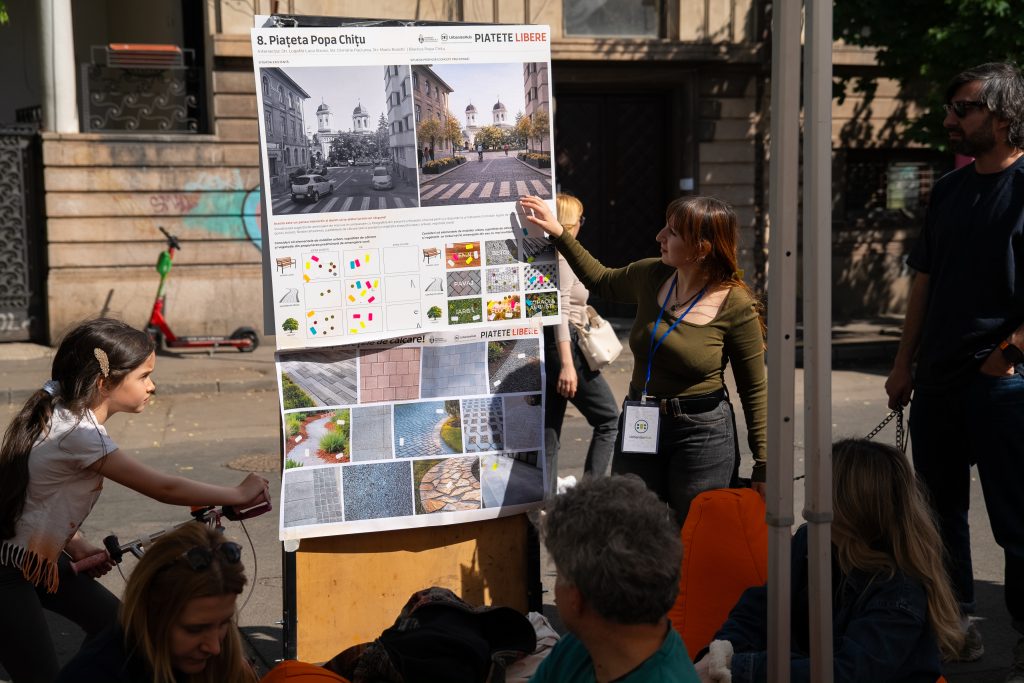
In addition to this temporary activation, the event also included an interactive exhibition dedicated to the 10 small public squares included in the project. The exhibition presented images, plans, indicative renderings and explanatory materials for each space. The renderings were not treated as final solutions. They were used as starting points for discussion.
The public was able to speak directly with the project team. Participants could also leave comments and proposals. The conversations focused on how these places are used today, as well as how they could be improved in the future.
What came up during the consultations
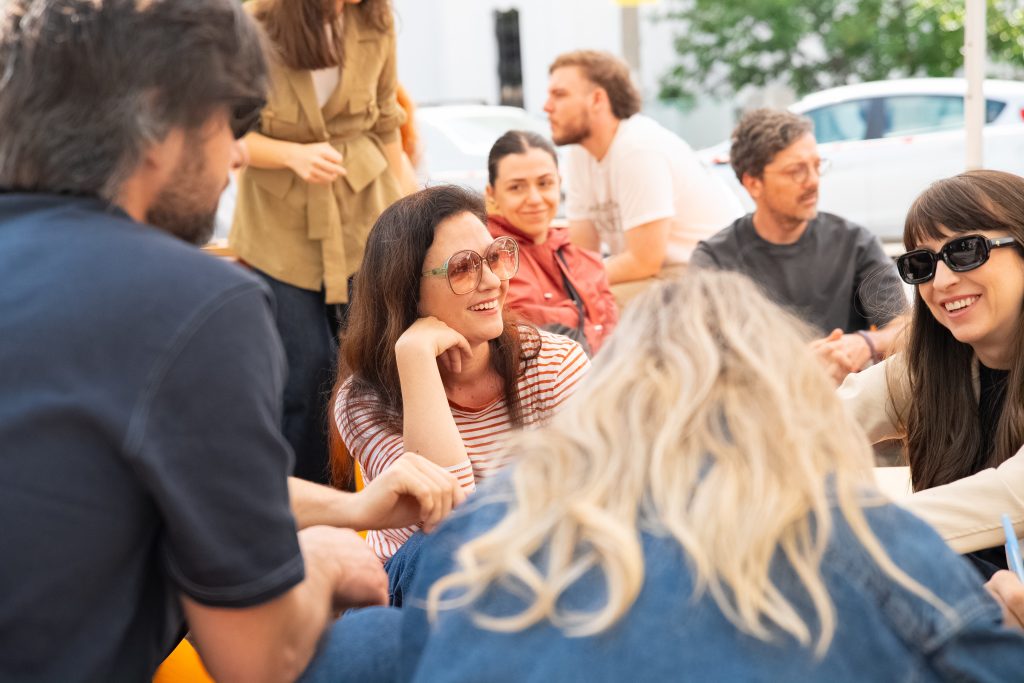
The discussions were diverse, as expected in a project about public space. The consultations brought together local residents, neighborhood users, local entrepreneurs, representatives of the administration and members of civic communities. People talked about pedestrian safety, car access, parking, green spaces, noise and local identity. They also discussed the role of small public squares as neighborhood spaces, not just areas for passing through or temporary activations.
One important outcome was the mobilization of part of the local community around Piața Sfântul Ștefan. This group prepared a memorandum outlining their main requests, needs and expectations regarding the reconfiguration of the square.
Beyond the different opinions, this shows that people are not indifferent to what happens to the spaces around them. On the contrary, when there is a proper framework for discussion, questions, arguments, tensions and concrete forms of involvement begin to emerge.
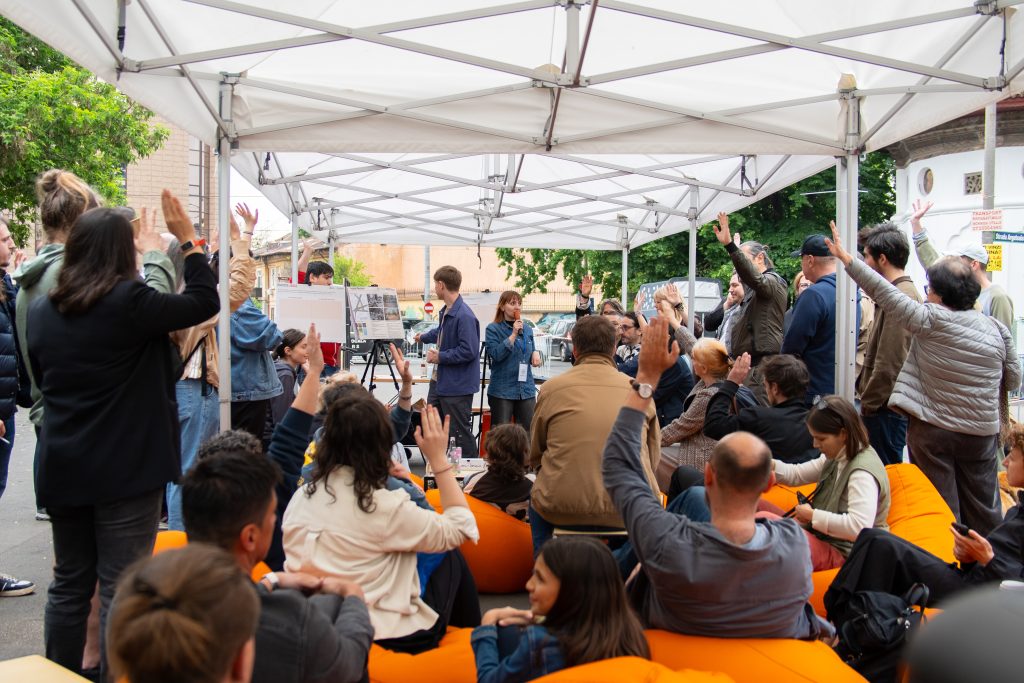
Representatives of the Sector 2 City Hall also took part in the event: Bogdan Gârbu, General Director of the General Technical Directorate, and Amza Mair, Public Administrator of Sector 2. They spoke with participants and collected observations from the field.
Civic tours, not tourist tours
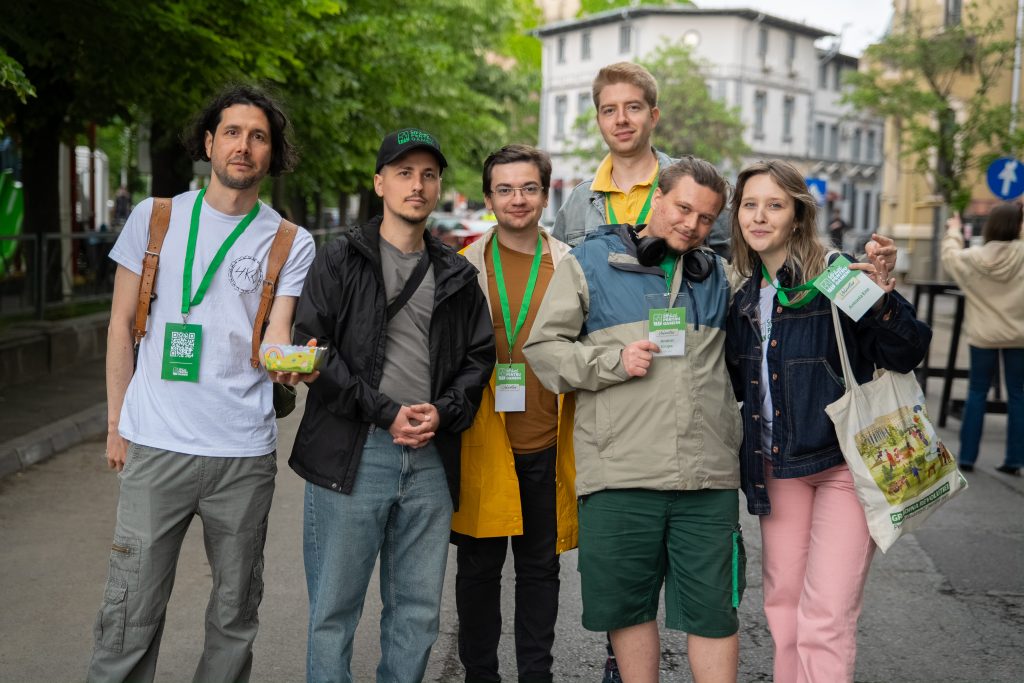
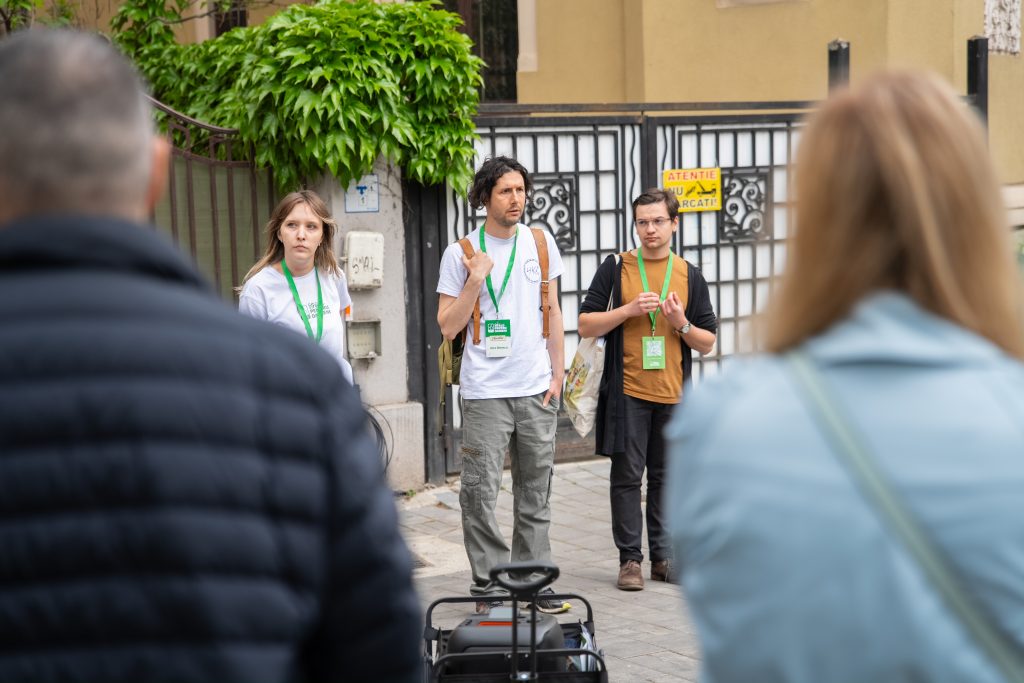
A complementary part of the weekend consisted of civic tours organized by the NGO Străzi pentru Oameni (Streets for People), in collaboration with the Open Squares team. These were not classic history, architecture or heritage tours, although they did include such elements.
Their main purpose was to invite participants to look at the area from a civic perspective. How are the streets that connect public spaces used today? What role do small public squares play? Why do public debates and consultations matter? What does everyday neighborhood life actually look like?
In this sense, the tours worked as an extension of the public consultations.
The weekend in numbers
Over the course of the two days, approximately 500 people passed through the temporarily activated space. Of these, around 80 participants took part in the public consultations themselves. So far, the online questionnaire has gathered 352 responses. In addition, the project website, piatetelibere.ro, has recorded over 5,000 interactions. For a project that is still in a preliminary stage, these numbers point to something important. Small public spaces, which may seem ordinary at first glance, generate real interest when they are brought into discussion.
What we learned from this experiment
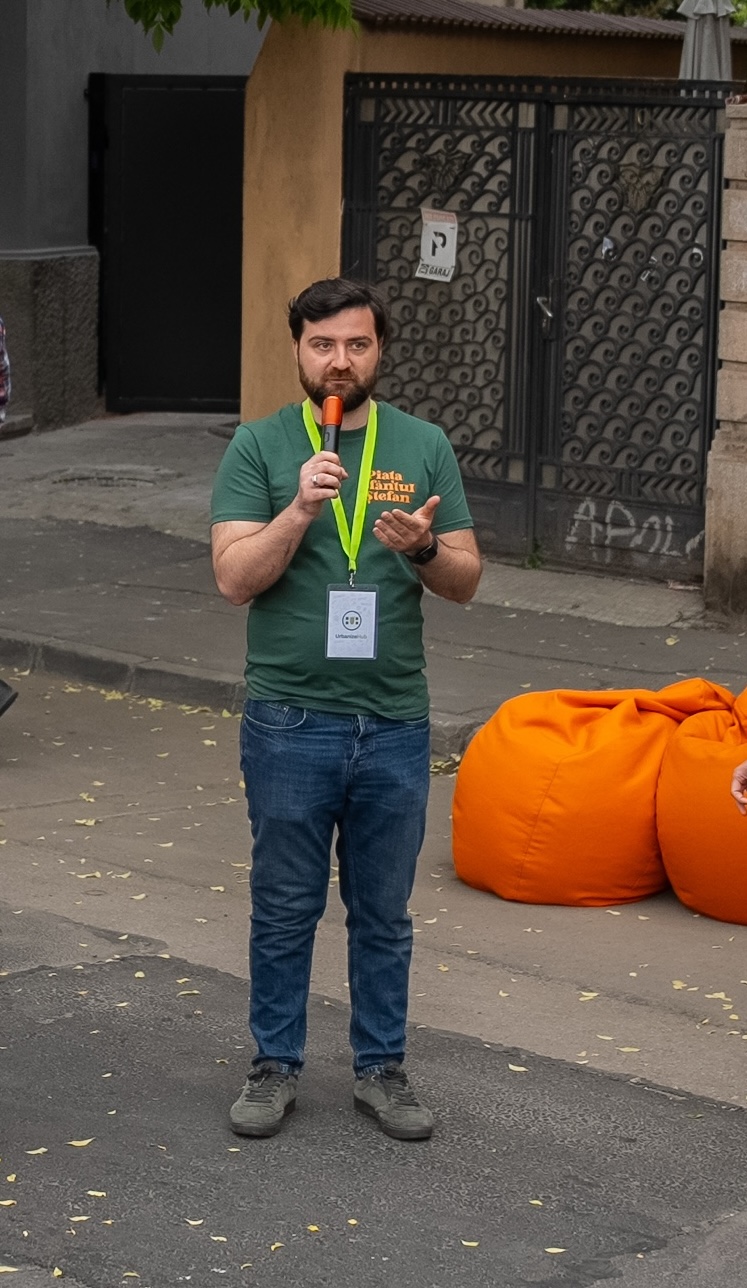
“This weekend confirmed something we knew in theory, but that had not really been tested in practice in Bucharest: a high-quality public space does not necessarily need a program in order to work. Sometimes, it is enough for a street to be freed from cars, closed to traffic and left open for people to use freely. For example, on Sunday, when children started playing and drawing on the asphalt, while adults were talking and relaxing in the sun, the transformation potential of these places became very clear. The consultations brought many questions, ideas and even objections related to the project, but also a dose of enthusiasm – all extremely necessary for a project that is important for the quality of public spaces in Bucharest,” said Samuel Stancu, coordinator of the Open Squares project, UrbanizeHub.
What comes next for Open Squares
The project is carried out under the technical assistance contract provided by the World Bank for the local public administration of Sector 2.
It aims to reconfigure a network of public spaces in the central-historic area of Sector 2. The process combines urban analysis, public consultation and the development of design directions adapted to how these places are used in everyday life.
Following the weekend consultations, the project team will extend the deadline for completing the questionnaire until May 24. In parallel, public communication will continue, so that the information reaches as many residents and users of the targeted areas as possible.
The suggestions received through the questionnaire, together with the observations collected on site, will be used to develop the proposals and the technical concept documentation.
The next stages – technical design, budgeting and project implementation – depend on the decisions and procedures of the local public administration. However, representatives of the District 2 City Hall stated that they want the process to move forward toward implementation as quickly as possible.
At the same time, the project sits within a broader shift in how cities think about climate action, public space and everyday urban life. District 2 of Bucharest is part of the EU Climate-Neutral and Smart Cities Mission, while the project’s approach connects naturally with the values promoted by the European Commission, the New European Bauhaus, NetZeroCities and Romania’s national M100 platform. At street level, these ideas become very concrete: more shade, better walkability, safer public spaces, civic participation, local identity and less pressure from cars.
A simple conclusion
Perhaps the simplest conclusion of the weekend is this: Bucharest has many small spaces that do not need to be completely reinvented in order to matter.
Sometimes, they simply need to be freed up and returned to everyday life. And when a car-free street is left to people, contrary to common assumptions, people actually know what to do with it.