What role do neighbours and street design play in how safe we feel? More than you might imagine. The two have been closely linked for centuries. So why does it feel as though that connection has faded over time?
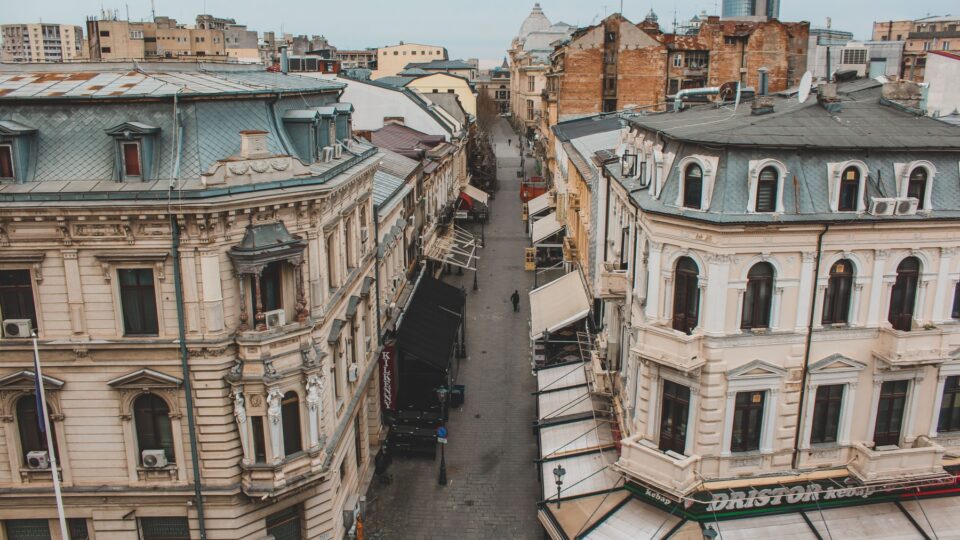
Perhaps you remember the balcony of a communist-era apartment block, a place from which, at least in theory, someone was always watching the street. Today, that same balcony has become a storage area or a private space overlooking an empty pavement or parked cars. This is no coincidence: a street full of people, with open shops and windows facing the pavement, feels different from an empty one, however well lit or clean the latter may be. Urban planners have been studying this mechanism for a long time. One of the earliest and most influential voices to explain it was the American journalist Jane Jacobs.
Jane Jacobs and the critique of the city planned from the top down
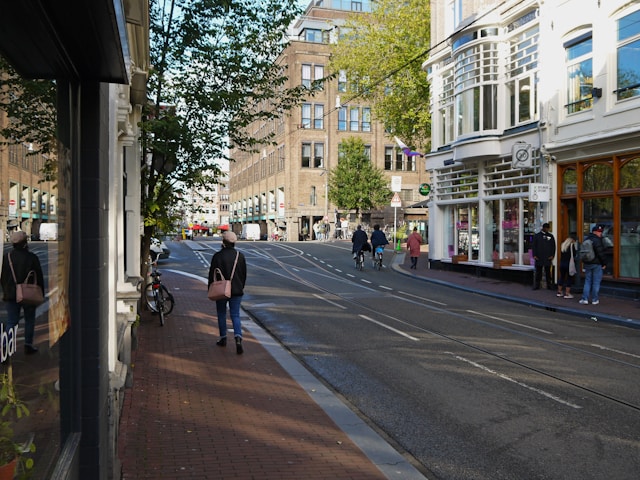
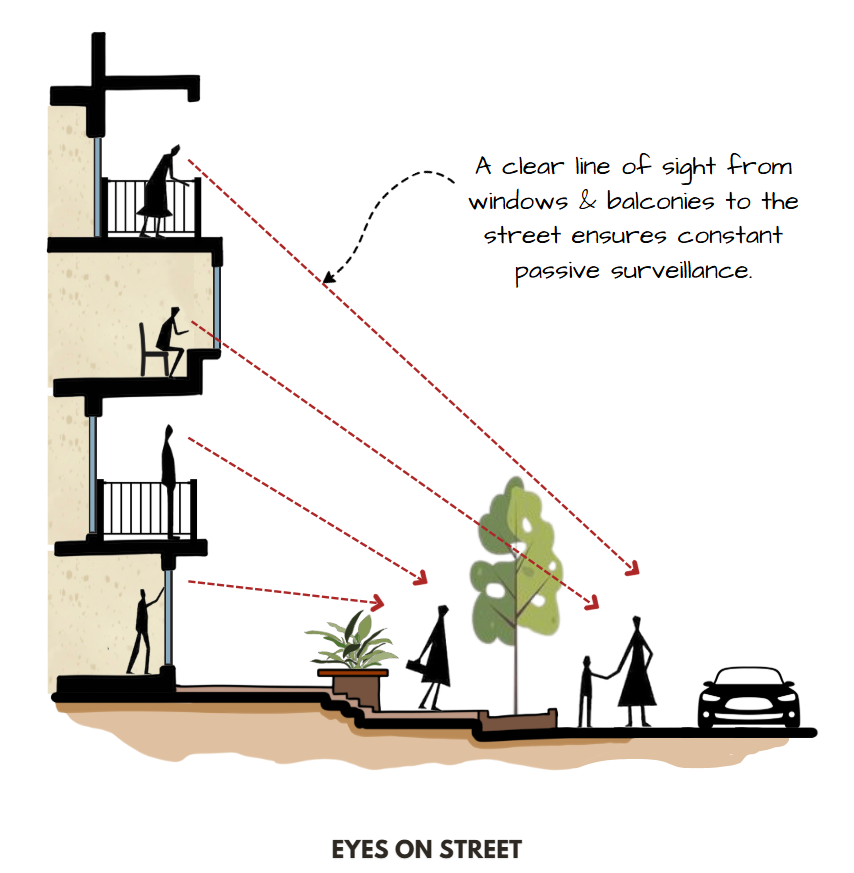
She was neither an architect nor an urban planner. She was a journalist. Perhaps that is precisely why her voice unsettled an entire society so profoundly. In the ’50s and ’60s, dominant modernist planning promised better cities through the strict separation of functions: residential-only areas, commercial-only areas, tower blocks set in green spaces isolated from the street, and free-flowing motor traffic at any cost. In 1961, Jane Jacobs published The Death and Life of Great American Cities and challenged this very logic. She argued something that ran against the prevailing intuition: a street’s safety depends not only on policing and infrastructure, but also on the continuous presence of people and on how buildings relate to the street. She called the phenomenon “eyes on the street”: every window and every shop opening onto the pavement becomes an eye keeping watch, without even realising it.
The community we ask for, but move onto our phones
Yet if the connection between neighbours and safety is so old, why does it seem to have disappeared? It is not because people no longer want community. On the contrary, they ask for it constantly. They simply look for it on their phones rather than on the pavement. One answer comes from Cartier de București, the socio-anthropological study published by Asociația Komunitas in 2015, based on fieldwork in three Bucharest neighbourhoods: Tei, Tineretului and Timpuri Noi. Over six months, a team of 13 students from the University of Bucharest’s sociology department and from SNSPA, coordinated by anthropologist Vlad Cătună, carried out 60 interviews and administered 350 questionnaires.
The findings confirm the very paradox we started with: in Timpuri Noi, 75% of respondents said they were satisfied with their neighbourhood, and 71% said they felt safe there. Yet when asked whether they trusted the local police, the figure dropped sharply to 35%. The safety people feel does not come only from the authorities; it often comes from elsewhere. More telling still, only 16% thought their neighbourhood “encourages people to get involved”, and fewer than half (42%) saw it as a lively place where neighbours actually interact. Another study, Barometrul Bucureștiului, carried out in 2004 by SNSPA’s Faculty of Political Science, showed something similar: 70-80% of Bucharest residents described the city using words such as “poverty” or “disorder”, yet 76% said they were satisfied with their own neighbourhood. In effect, people reject the wider city but remain attached to the small patch of territory they know.
However, when the Komunitas researchers tried to establish what actually held the community together in that small, cherished territory, the answer was limited: beyond homeowners’ associations, almost no other form of association between neighbours emerged. This is not an impression, but an absence documented directly through fieldwork, neighbourhood by neighbourhood. Where neither design nor trust helps neighbours get to know one another, a useful substitute emerges: the stairwell’s Facebook group or the apartment block’s WhatsApp group. These are not bad in themselves; they help people quickly share news or respond to an emergency. The problem arises when they become the only shared space, the only place where neighbours still “meet”, without ever doing so in person, in the stairwell or on the street.
Freeing up space does not mean people will use it
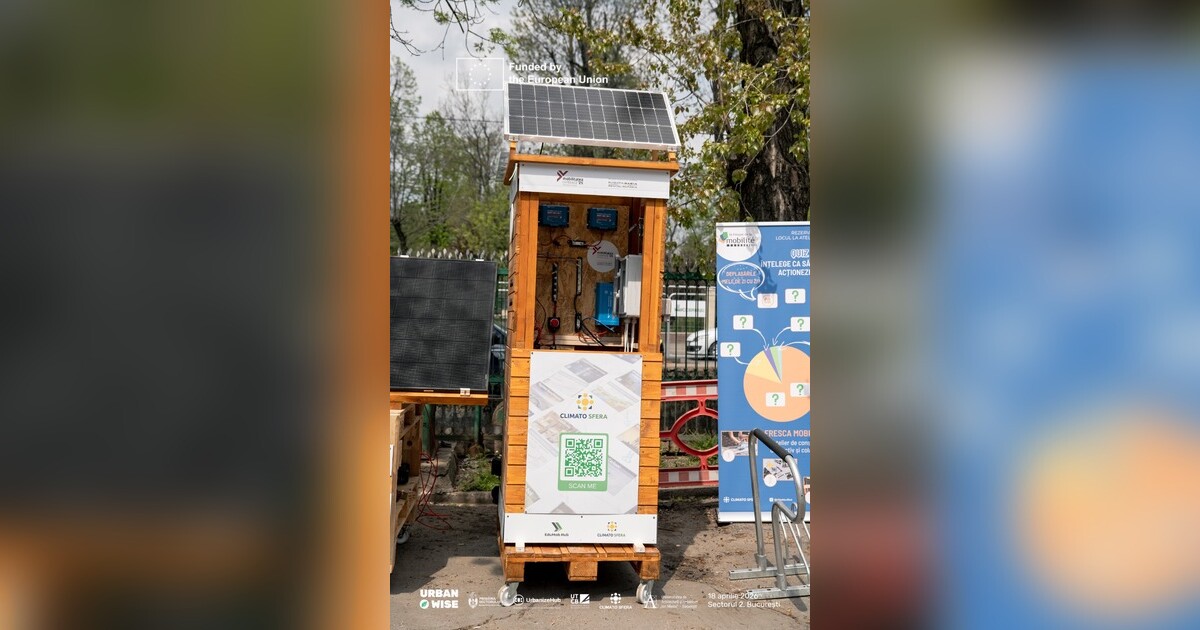
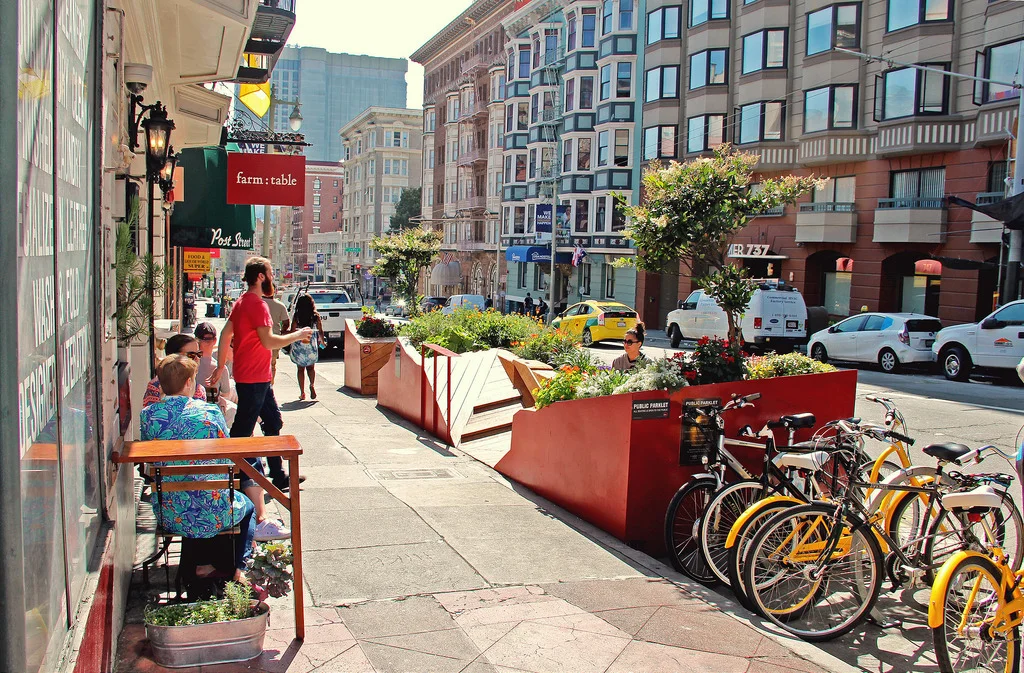
The good news is that nobody is starting from scratch. The Komunitas community did more than study the three neighbourhoods; it also intervened directly. It installed an “Acumulator Urban Mobil” in public space and organised events such as “Ziua Cartierului”, bringing neighbours who did not know one another face to face for a few hours, with a concrete reason to talk. The simplest example, however, comes from San Francisco. In 2005, a few residents paid for a parking space, brought in turf and a bench, and turned a car parking bay into a small park, a “parklet”, for a few hours. The idea proved so popular that the city institutionalised it: today, anyone can request the permanent conversion of a parking space into a place to sit, maintained by local residents or businesses.
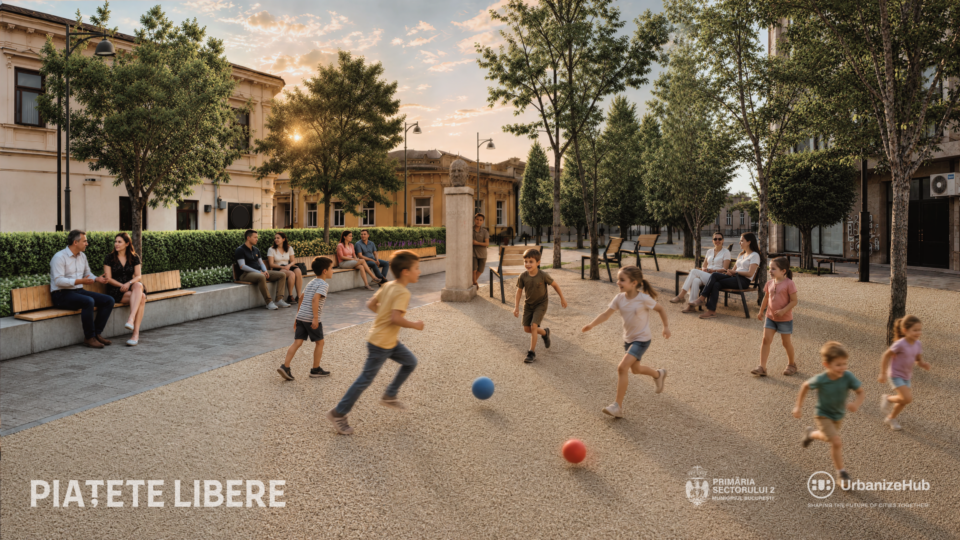
What matters here is not pedestrianisation in itself; this is about more than removing cars from somewhere. An empty parking space turned into a wider pavement will remain empty if nobody stops there. What really made the parklet work was the bench: a concrete reason for someone to stop, sit down, see a neighbour and perhaps exchange a few words. This is exactly what Jacobs meant by a window facing the street: the glass is not what matters, but someone looking through it. It is a good idea, but its success depends on more than a simple test of whether people turn up. A parklet that lasts needs consistent maintenance, regulation, funding and support from the city authorities. Without these, it remains a temporary experiment, however warmly local people welcome it. When those conditions are met, the parklet really does its job: it brings people together, just as its inventors hoped.
Communities do not always have to wait for major interventions by public authorities. Through tactical urbanism, residents can test simple, quick and affordable solutions, from temporarily creating somewhere to sit to activating an unused space, to show how their neighbourhood could work differently. Such interventions do not replace planning or public investment, but they can start a conversation, bring people together around a shared problem and turn a local idea into a larger project. Another good starting point is the Mini-guide to tactical urbanism, which presents examples and tools that citizens can use to get directly involved in improving public spaces.
The conclusion?
We return, then, to the balcony. It was not the window that mattered, but someone on the other side of it. We have lost that through concrete decisions: apartment blocks without ground-floor shops, neighbourhoods and communities erased to make way for others, and a level and pace of residential mobility that may be too high for neighbours to get to know one another. These are just a few of the reasons.
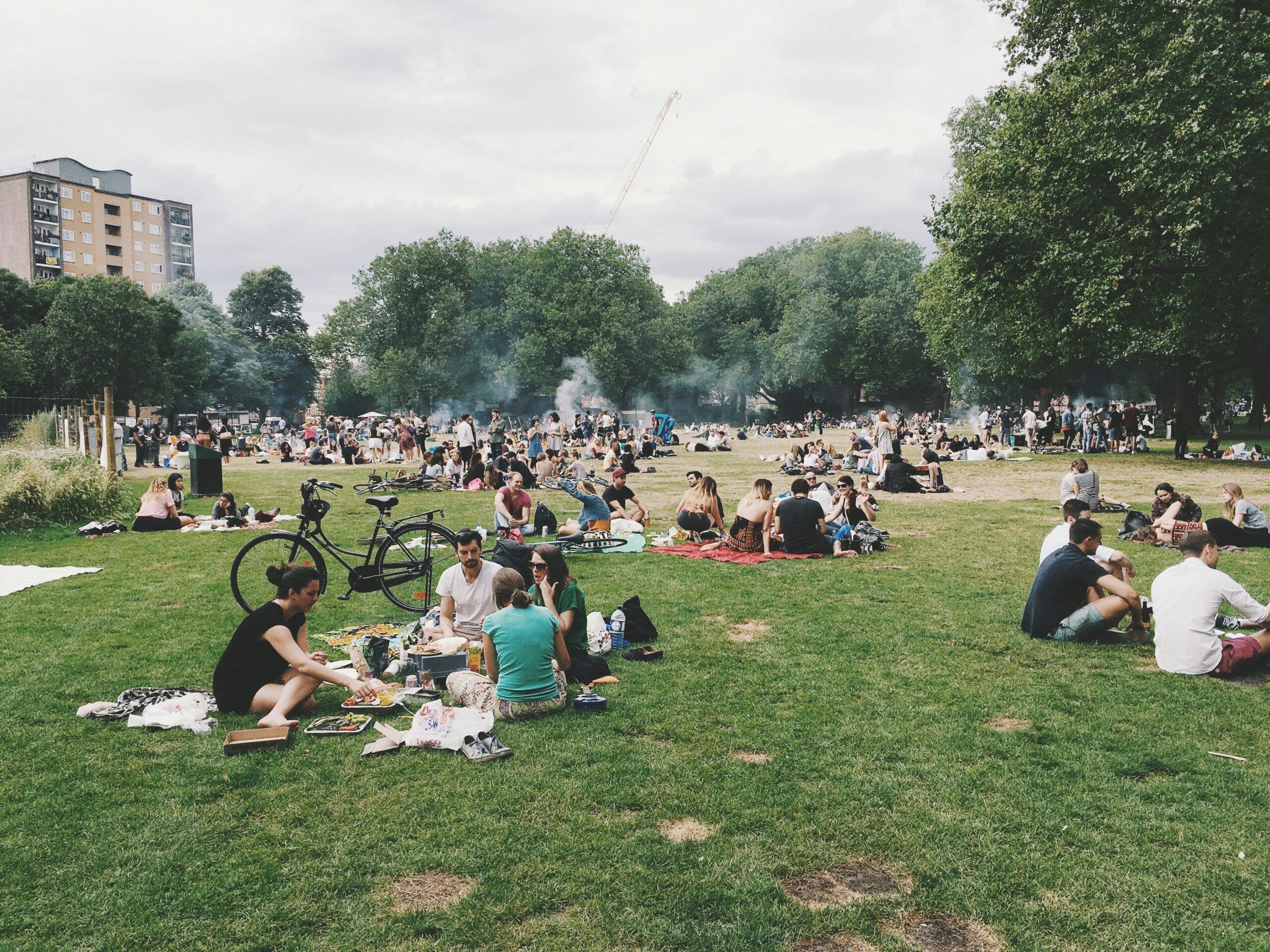
Ultimately, design does not create community on its own, but it can create the conditions in which community emerges. An active ground floor, a shaded bench, a shop window facing the pavement or a neighbourhood event does not guarantee that neighbours will become close, but it gives them the chance to meet, recognise one another and build relationships over time. Without these settings, such connections become much harder to form.
Sources:
- Jane Jacobs, The Death and Life of Great American Cities, 1961, chapter “The Uses of Sidewalks: Safety”
https://www.miguelangelmartinez.net/IMG/pdf/1961_Jacobs_TheUsesofSidewalksby_excerpt.pdf
- Asociația Komunitas, studioBASAR, Spații Urbane în Acțiune / Urban Spaces in Action, Bucharest, 2015
https://asociatia-komunitas.ro/pdf/SUA-FINAL-small-rez.pdf
- Asociația Komunitas, Cartier de București. Socio-anthropological research: Tineretului, Timpuri Noi, Tei, 2015 (the full report, with all the statistics used in this article)
https://beta.asociatia-komunitas.ro/pdf/Cartier-de-Bucuresti.pdf
- UrbanizeHub, “How do we involve people in urban planning projects?”, 2022 (Străzi Deschise / ARCEN, Proiectul Liniei / District 6)
https://urbanizehub.ro/cum-implicam-oamenii-in-proiecte-de-urbanism/
- Mini-guide to tactical urbanism
- City-REDI Blog (University of Birmingham), “Tactical Urbanism: A Global Trend Key to ‘Building Back Better’”
https://blog.bham.ac.uk/cityredi/tactical-urbanism-a-global-trend-key-to-building-back-better/
- Parklet guide
https://groundplaysf.org/wp-content/uploads/San-Francisco-Parklet-Manual.pdf
https://sfbetterstreets.org/find-project-types/activating-street-space/parklets/index.html