Cover photograph: Debarcaderul Timpuri Noi, Bucharest. Source: Dâmbovița Apă Dulce.
Dâmbovița crosses Bucharest from west to east. But how much is it really part of the city’s everyday life?
Dâmbovița, the only river that crosses Bucharest from west to east, continues to function more as water engineering infrastructure than as part of urban life. Yet in a city increasingly exposed to heatwaves and a shortage of shaded public spaces, the river has the potential to become an important part of the capital’s infrastructure for cooling, active mobility and recreation.
The question is not whether we can imagine a different Dâmbovița, but how we can turn this potential into a coordinated set of interventions that bring water closer to people and connect neighbourhoods to the river.
A river treated as infrastructure
One relevant approach is green-blue infrastructure: a network in which vegetation, parks, permeable soils, rivers and lakes are considered together as urban infrastructure. Such systems can help manage water, reduce heat discomfort and support biodiversity, while also creating better public spaces for people.
In Dâmbovița’s case, the urban restructuring carried out during the communist period prioritised water engineering and motor traffic. The direct relationship between the river, pedestrians and public space remained secondary, and in many places the riverbanks are still separated from neighbourhoods by heavy traffic and extensive hard surfaces.
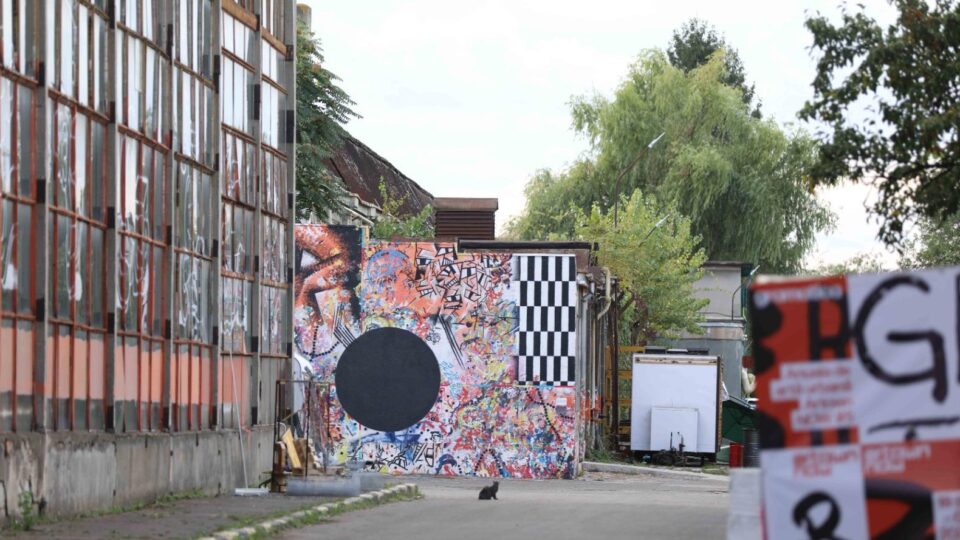
Timpuri Noi is a good example of this contradiction. Over recent decades, the area has evolved from an industrial site into a mixed-use urban hub, well connected to public transport and home to offices, services and new developments. Nevertheless, the relationship between this growing urban activity and Dâmbovița remains fragmented, while the riverbank is still underused as public space.
Why it matters now
Along many stretches of Dâmbovița, the pedestrian experience is still dominated by traffic, narrow pavements, asphalt surfaces and a lack of shade. During heatwaves, these conditions increase heat discomfort and make the riverbanks less appealing for walking, relaxation or everyday activities.
Studies using satellite imagery of Bucharest indicate summer surface temperatures of approximately 32–50°C in certain central and industrial areas. This refers to surface temperature, not air temperature, but the distinction matters for how we experience hard-surfaced spaces and for the role that water and vegetation can play in the city’s adaptation to climate change.
What we can learn from Ljubljana
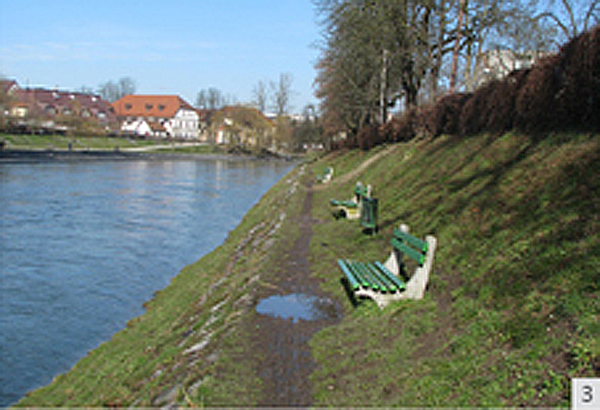
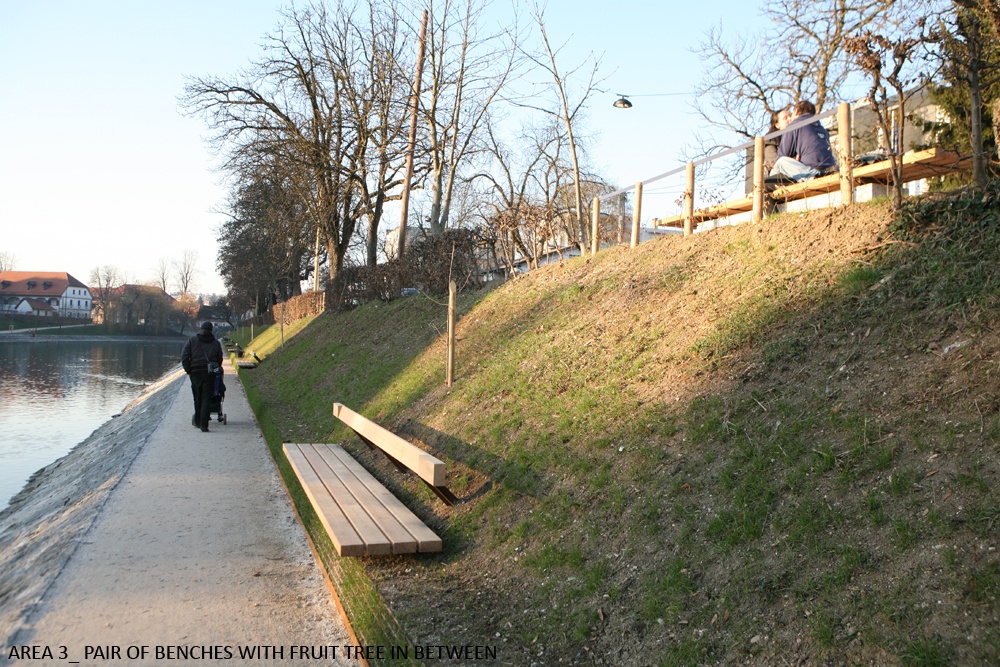
One of the most relevant European examples comes from Ljubljana. From 2004 onwards, the municipality treated the Ljubljanica river as a defining element of the city centre, coordinating a series of interventions by several teams of architects and urban planners. The main works took place between 2006 and 2011.
Rather than relying on a single spectacular intervention, the project gradually created a system of public spaces: pedestrian promenades, squares, riverside parks, pedestrian bridges and places where people can get closer to the water. Areas previously dominated by traffic and parking were transformed into places for walking, meeting and recreation.
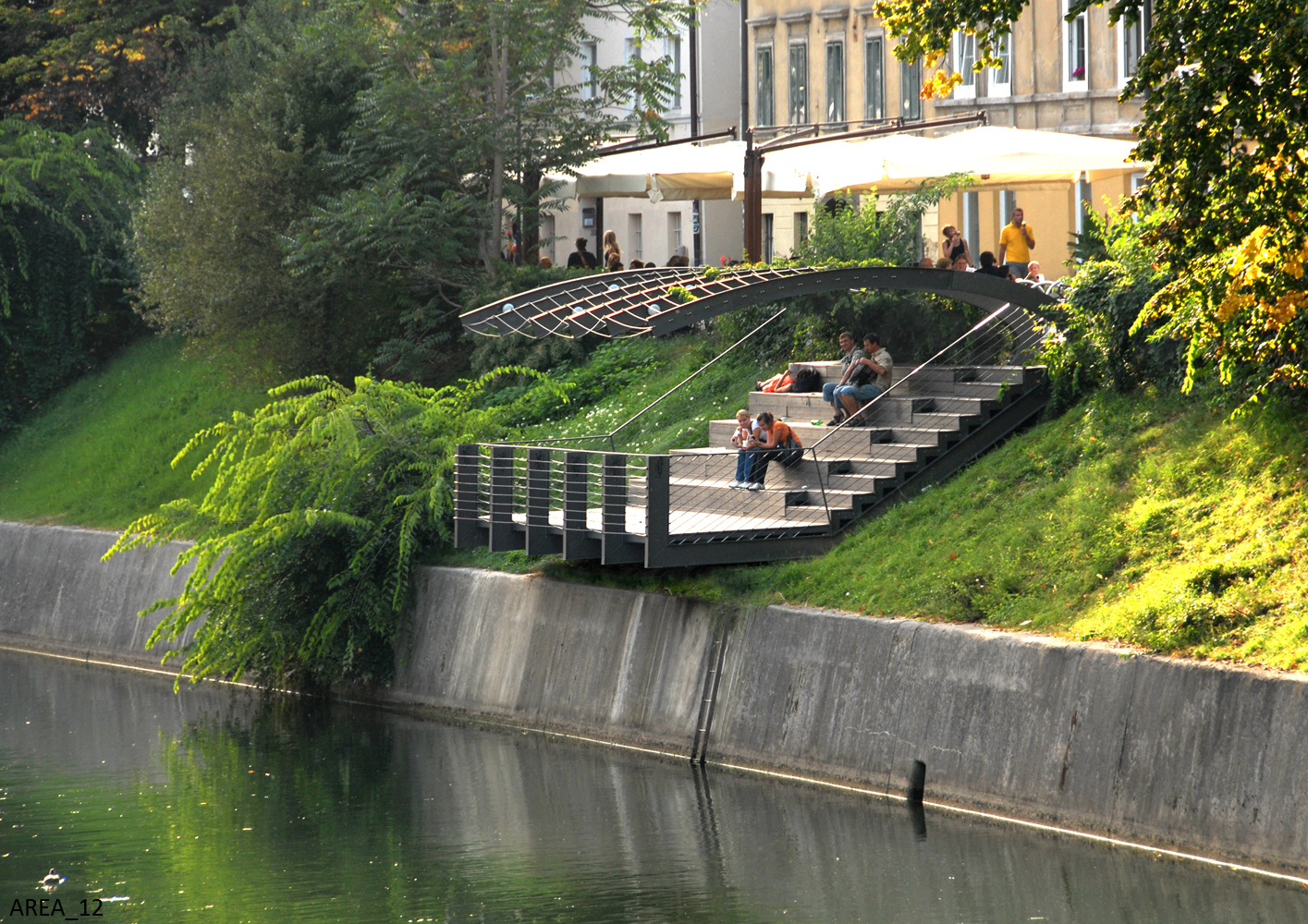
The redevelopment of the Ljubljanica riverbanks received the European Prize for Urban Public Space in 2012. The most useful lesson for Bucharest is the method: targeted interventions coordinated within a shared vision for the entire river.
Dâmbovița Apă Dulce: testing at full scale
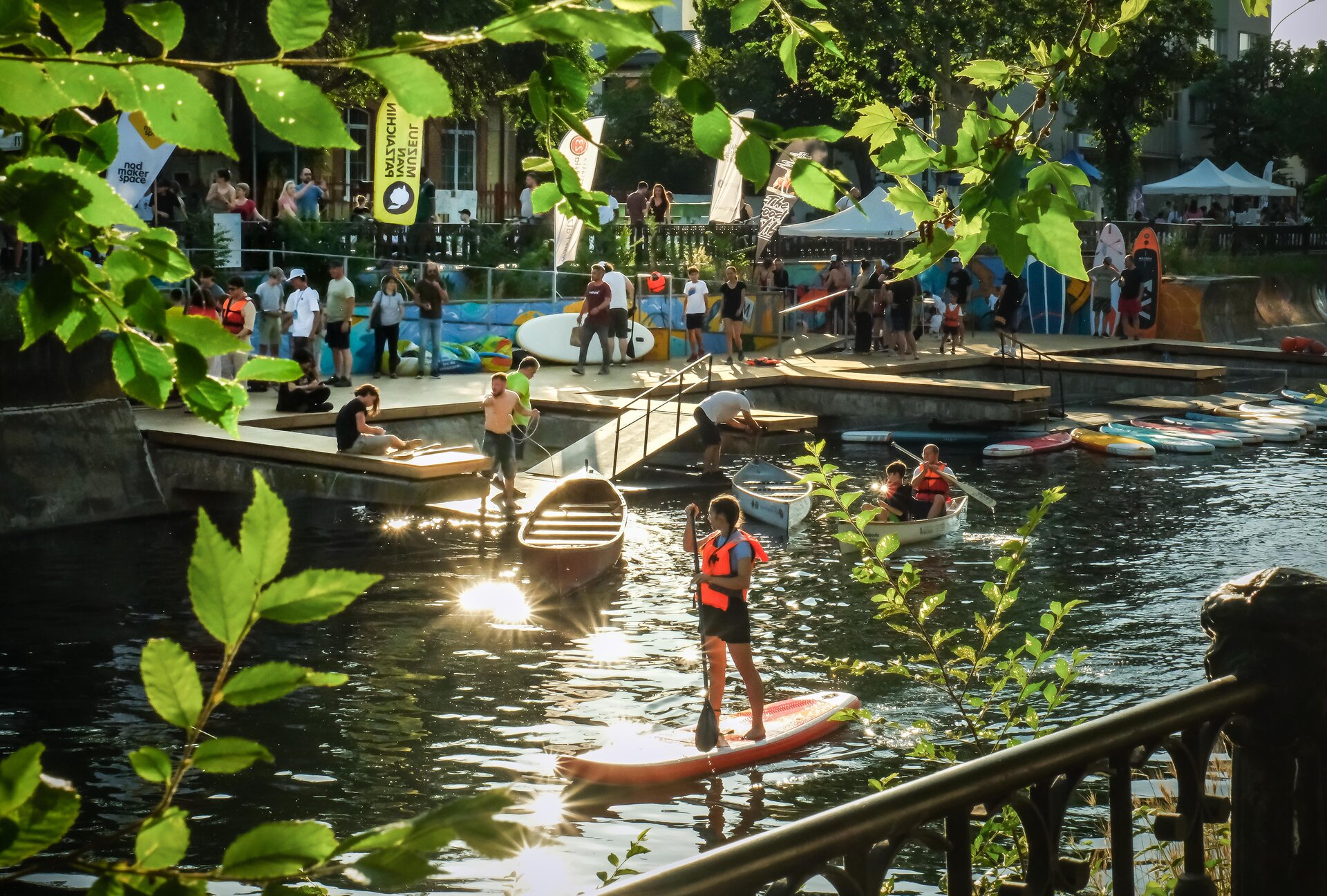
In Bucharest, the Dâmbovița Apă Dulce programme is already demonstrating, on a small scale, how this change can begin. Developed by Nod Makerspace and Asociația Ivan Patzaichin – Mila 23, the programme aims to reconnect the city with its river through infrastructure, biodiversity, public activities and urban experiments.
In 2025, Debarcaderul Timpuri Noi was transformed from a leftover space into an accessible public place through reversible interventions that are easy to test: a ramp providing universal access, a timber seating platform and floating pontoons that bring people closer to the water. The process involved designers, makers, water sports operators and the local community.
The intervention matters precisely because it does not attempt to solve everything along Dâmbovița at once. It tests a new relationship between the city and the water, showing what works before larger investments are made.
Three principles for bringing Dâmbovița closer to the city
The examples above show that transforming Dâmbovița does not depend on a single intervention, but on a series of coordinated decisions that can be implemented gradually along the river. These projects suggest three simple principles that can guide the relationship between water, public space and the city.
1. Prioritise walking and active mobility
Rebalance riverside space in favour of continuous, comfortable and shaded promenades connected to the city’s pedestrian and cycling networks.
2. Inclusive access and a more direct relationship with the water
Create safe, accessible points where people can make their way down to the river, spend time beside the water and use the riverbanks regardless of age or physical ability.
3. Dâmbovița as an urban connecting route
Use the river to connect neighbourhoods, parks, institutions, transport hubs and other points of interest along a continuous urban route.
The next test: Regie
Right now, the idea of bringing Dâmbovița closer to people can be seen and tested in the city itself. On 3-4 October 2026, Dâmbovița Delivery comes to Regie, marking the opening of a new access point to the water, Debarcaderul Regie. For two days, the river’s left bank, between Grozăvești and Podul Ciurel, becomes a real “city in testing”: with activities on the water, workshops, installations, urban explorations, music and conversations about Dâmbovița’s future. Admission is free, and the event offers a chance to see at full scale how temporary interventions, tactical urbanism and community involvement can pave the way for permanent transformations.
If we want Dâmbovița to become a green-blue corridor for Bucharest over time, experiments like these matter because they allow us to see what works before building permanent solutions. So, if you would like to discover the river from a different perspective, Regie is a good place to start this weekend.
A process, not a single intervention
Green-blue infrastructure means more than greening the riverbanks. It means treating the river simultaneously as climate infrastructure, public space and a route for mobility.
The example of Ljubljana and the Dâmbovița Apă Dulce experiments show that transformation can begin incrementally: through access to the water, shaded spaces, promenades, active mobility and pilot projects that can be evaluated and then expanded.
The aim is not to reinvent Dâmbovița through a single investment, but to build a new relationship between Bucharest and its river over time. A more accessible river can mean a cooler, healthier and better-connected city.
How would you like to use Dâmbovița?
Article written by Vlad Catila, a student at Universitatea de Arhitectură și Urbanism „Ion Mincu” (UAUIM), during his internship with UrbanizeHub, and adapted by the editorial team.
Sources
- Dâmbovița Apă Dulce: Debarcaderul Timpuri Noi
- Dâmbovița Apă Dulce: Dâmbovița Delivery Regie 2026
- AGERPRES: Dâmbovița Delivery comes to Regie, 30 September 2026
- European Prize for Urban Public Space: Rearrangement of Ljubljanica riverbanks
- European Commission Knowledge4Policy: Green and Blue Infrastructures
- SGEM: Determination of Land Surface Temperature using Sentinel-3 SLTR data
- Timpuri Noi Square: urban context and development