Within UrbanWise, the urban design component is coordinated by the Ion Mincu University of Architecture and Urbanism, which contributes expertise in urban regeneration and nature-based solutions. This stage aims to turn climate neutrality objectives into concrete proposals adapted to an actual urban space.
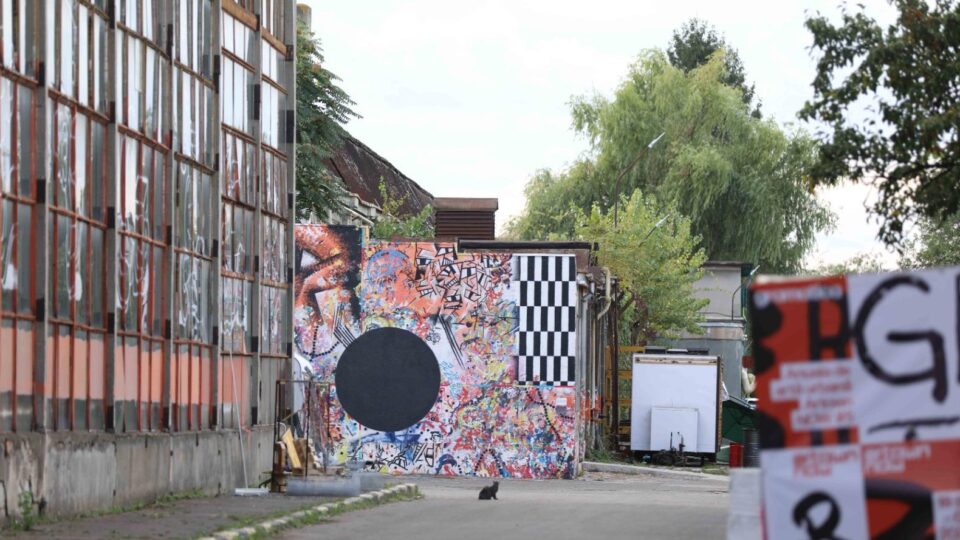
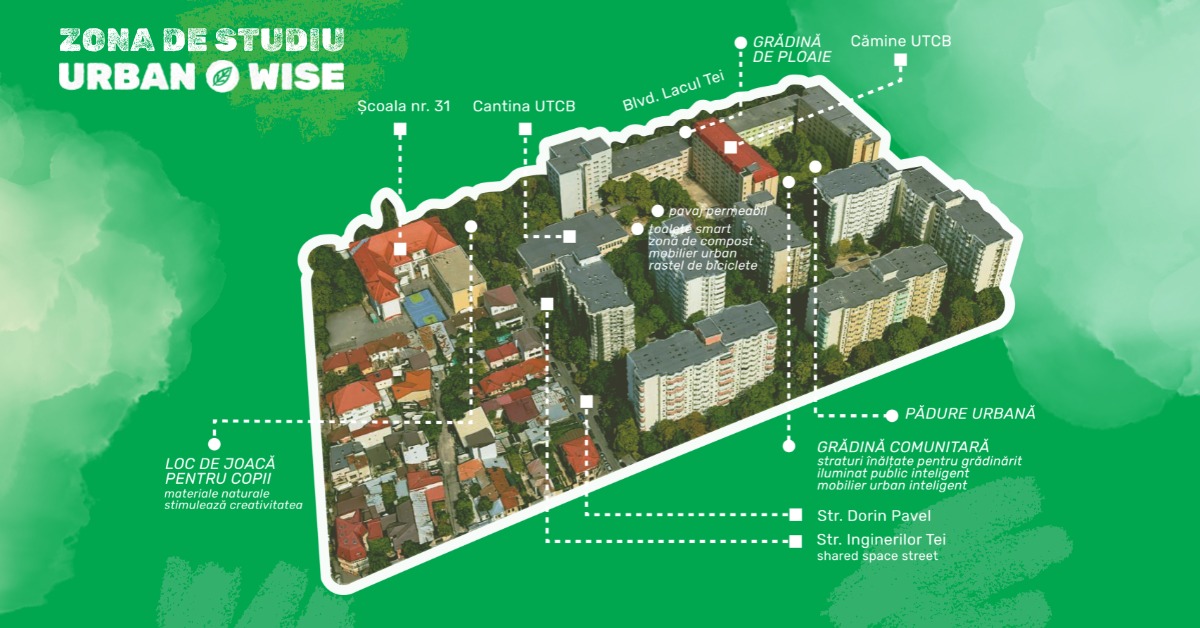
The intervention area is located around the UTCB canteen on the Tei campus, a space with potential that is currently fragmented and dominated by asphalt surfaces. Circulation routes are unclear, while green spaces are scarce and underused, affecting comfort and the way students and residents use the area every day.
The process began with a detailed analysis of the site: existing green spaces, infrastructure, circulation routes and the relationship between the campus and the neighbourhood. This information was supplemented by data from the public consultations and participatory activities carried out within the project, ensuring that the proposals responded to real needs.
Based on this analysis, the UAUIM team developed several intervention scenarios. These include replacing impermeable surfaces with paving that allows water to infiltrate, introducing rain gardens and extending green areas. The proposed vegetation is suited to the urban environment and helps reduce temperatures and improve air quality.
The space is reorganised into areas with clearly defined uses. The canteen entrance becomes a place to meet and relax, with street furniture and planting. Better-defined pedestrian routes and useful facilities, such as bicycle parking and recycling points, are proposed behind the building. Part of the site is kept available for future development in connection with other projects in the area.
Collaborative working formats, particularly Citymakers Lab, played an important role in defining the final scenario. Ideas from the community, specialists and project partners were discussed there and incorporated into the proposal. This process helped refine the solutions and make them more relevant to the people who actually use the space.
The project serves as a testing ground for interventions that can also be applied in other urban areas, with solutions designed for gradual implementation and adaptation to context. The area thus becomes an example of how existing spaces can be improved through simple, well-integrated interventions that are easy to replicate, contributing to a more comfortable city that is better adapted to climate change.