What the capital’s first urban identity study tells us
There is something slightly schizophrenic about a Bucharest resident’s relationship with their city. They defend it when someone else criticises it, complain about it every day, proudly photograph it for Instagram and sometimes say they want to leave, only to end up staying.
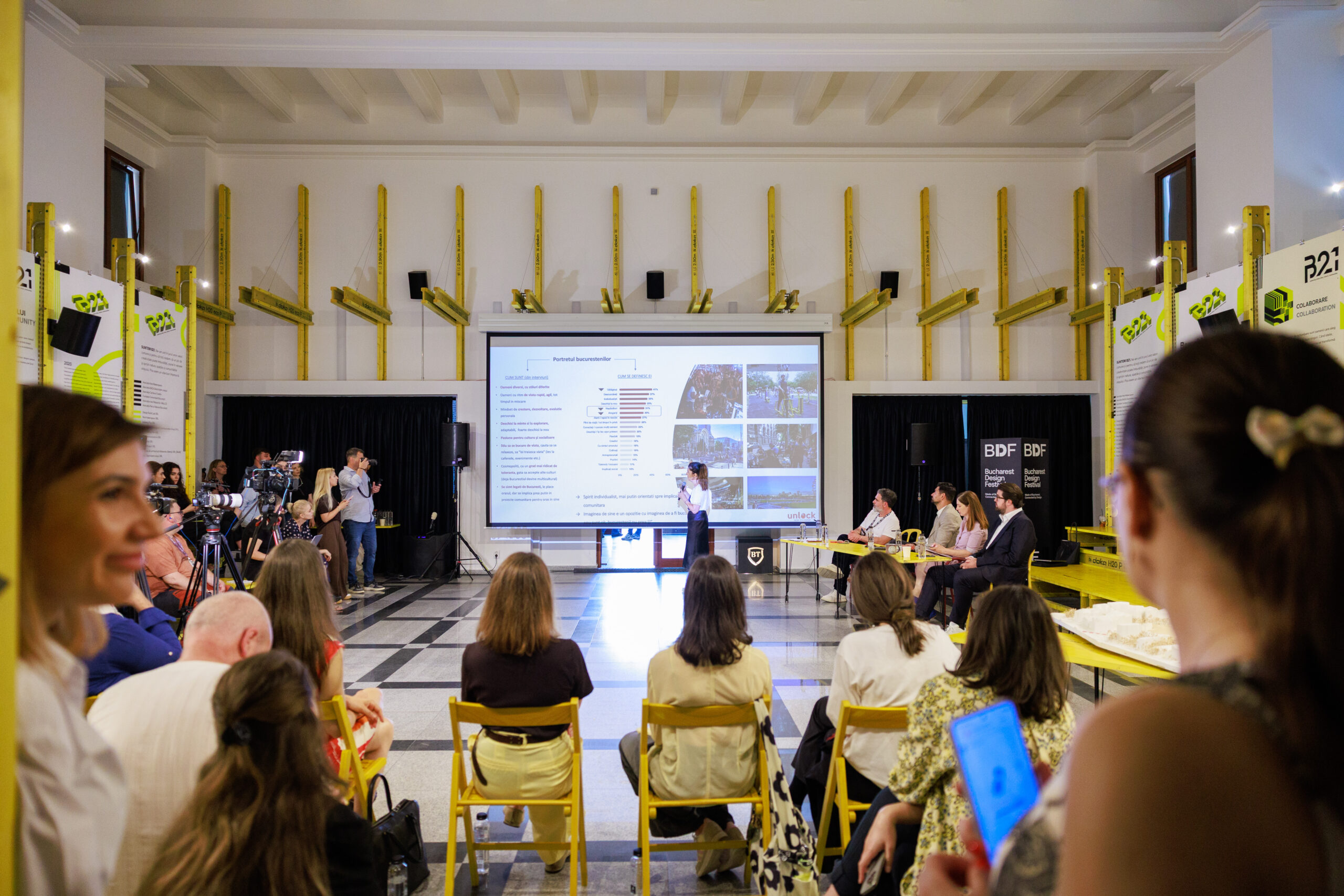
Unveiled at Bucharest Design Festival 2026, the study conducted by the Bucharest Community Foundation in partnership with research agency Unlock offers insight into how residents relate to the capital and the communities they belong to. The research explores urban identity, a sense of belonging and social cohesion, bringing both widespread perceptions and findings that deserve closer examination into focus.
UrbanizeHub attended the launch and followed the findings of this first study dedicated to Bucharest’s identity with interest. The data confirm many of the observations we frequently encounter in our projects and consultations, while also highlighting important paradoxes in the relationship between Bucharest residents and their city. They offer relevant points for reflection on the capital’s future.
Based on online interviews with a sample of 400 people and supplemented by 16 in-depth interviews, the perception study on Bucharest’s identity explores territory that Romanian cities usually avoid: how people feel about the place they live, how much they consider it their own, and to what extent they feel part of a community beyond their apartment building or neighbourhood.
A city people value, a community they miss
On paper, Bucharest fares well when it comes to emotional attachment. Six in ten residents say they are proud to live in the capital, and 61% feel attached to it. The city is perceived as vibrant and dynamic, with something new to discover all the time. It is seen as an adventurous and surprising place offering everything from zip lines and boat trips on the lake to arts scenes, underground culture and nightlife. People describe it as colourful, energetic and open, and some even say that Bucharest residents are warmer and more welcoming than those of other European capitals.
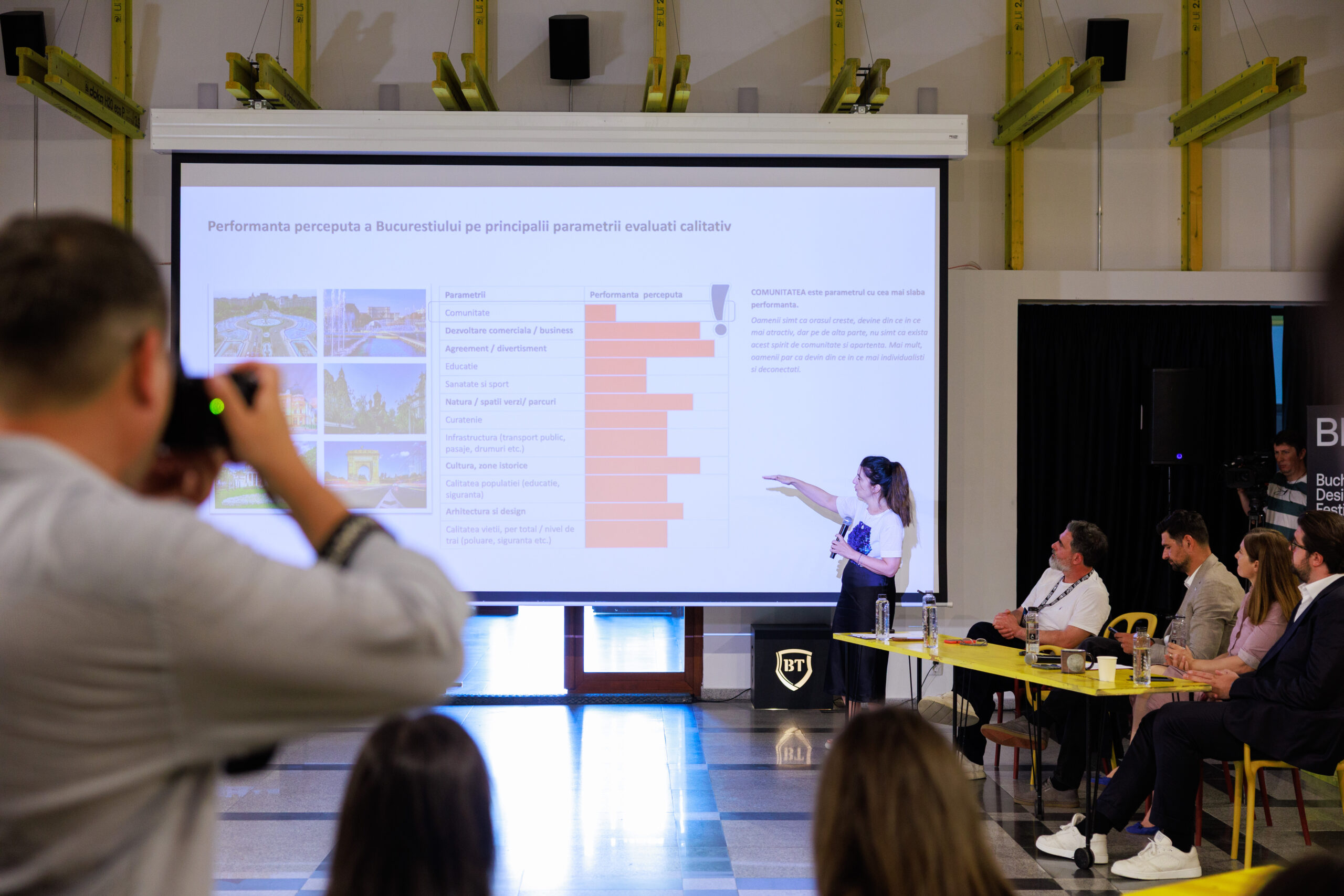
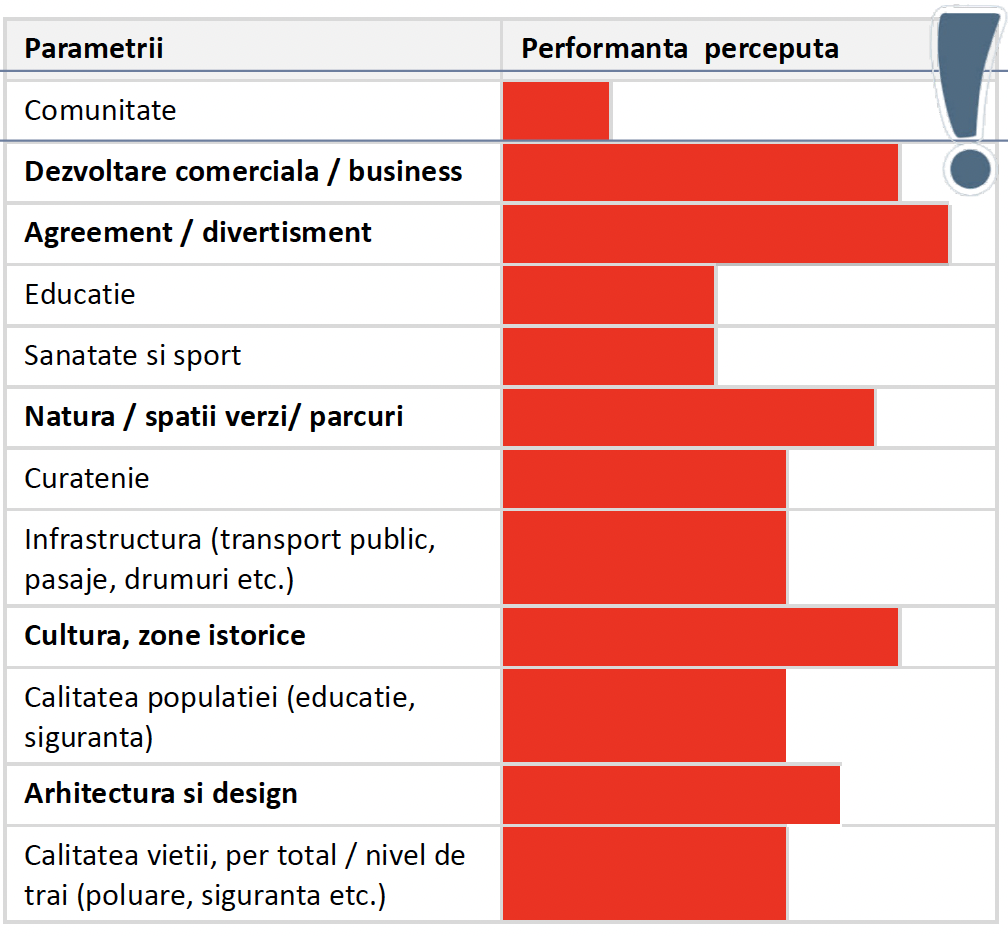
When it comes to community, however, the picture changes. According to the study, community is the lowest-rated of all the dimensions assessed, below infrastructure, cleanliness and environmental quality. People feel that the city is growing and becoming more attractive, but they do not feel a sense of community and belonging. They also perceive an increasingly pronounced tendency towards individualism and disconnection.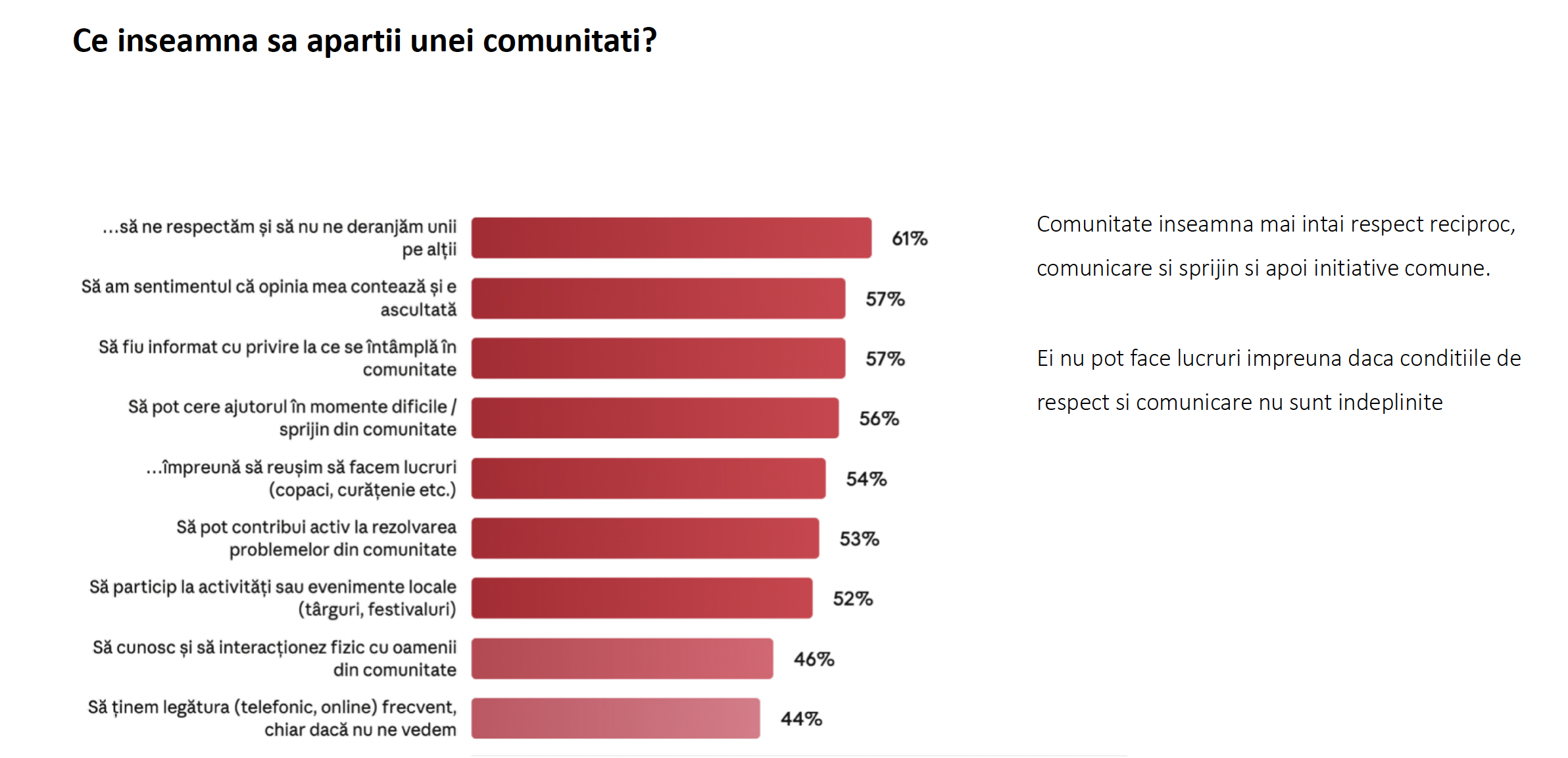
This is the central tension identified by the study, and it is a real one. Bucharest works extremely well as a place of resources and opportunities, where people can build a career and find national and international connections, varied entertainment and university education. It is less successful as a source of emotional connection or community identity. People are connected to the city through what it offers them, and less often through who they are together within it.
A portrait of a Bucharest resident being honest with themselves
A detail from one of the interviews perfectly captures a paradox that many people instinctively recognise: a Bucharest resident’s self-image tends to be at odds with their view of Bucharest residents in general. “I’m all right; Bucharest residents, not so much.” This dissonance can be found in many major cities, but it helps explain why building something at the scale of an entire city is so difficult: everyone feels different from the crowd and, in doing so, already separate from it.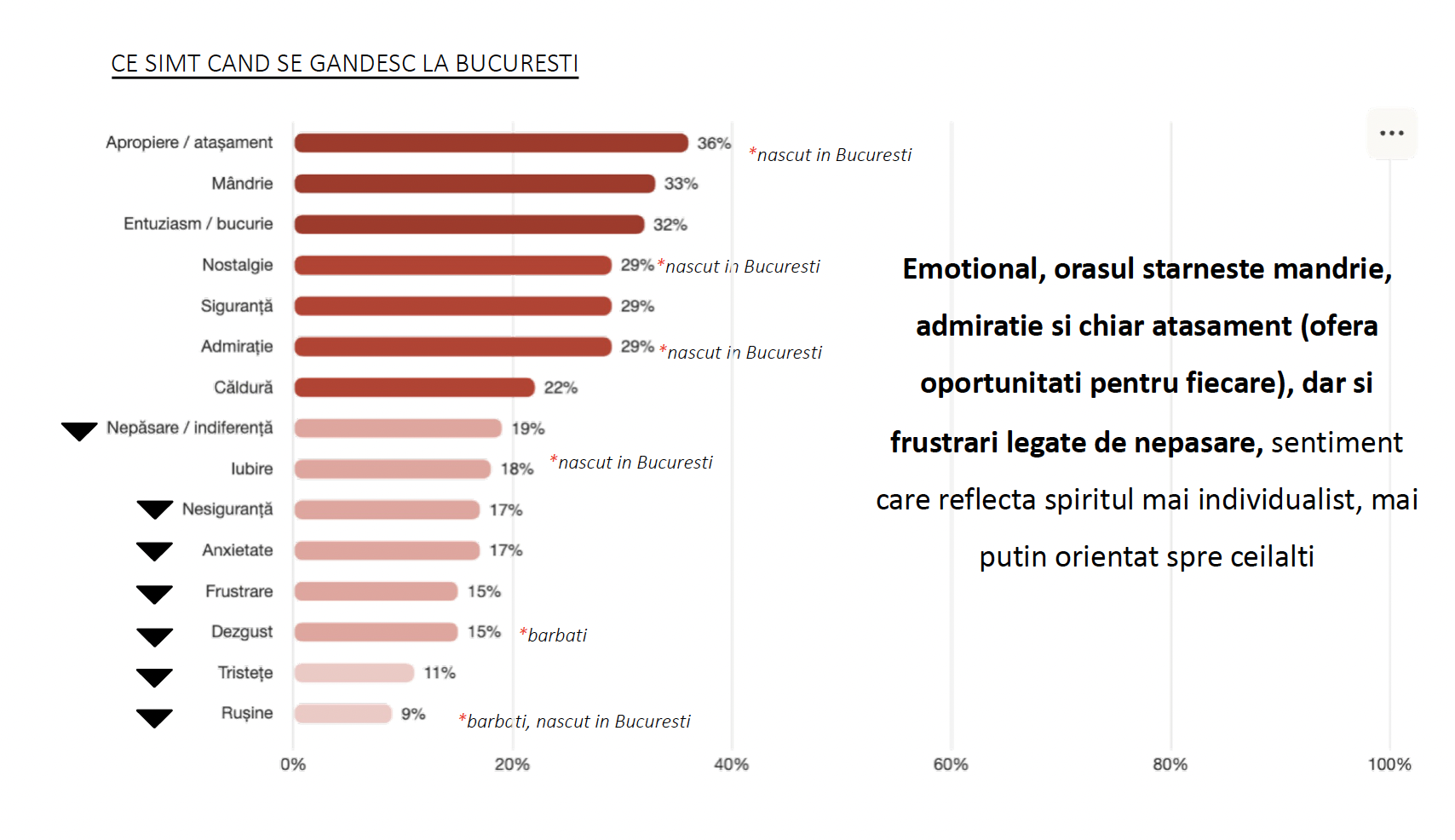 The survey figures paint a consistent picture. Most respondents see Bucharest residents as noisy (41%), resourceful (37%) and individualistic (35%). Positive qualities also feature, including openness to new things (33%), agility (27%) and a passion for culture, but they rank lower. Only 10% describe them as socially engaged. Combined with the fact that the same people describe themselves in the qualitative interviews as open, cosmopolitan, curious and tolerant, this suggests something important: the problem is not a lack of values, but the absence of a framework in which those values can be expressed collectively.
Why people leave, or consider leaving 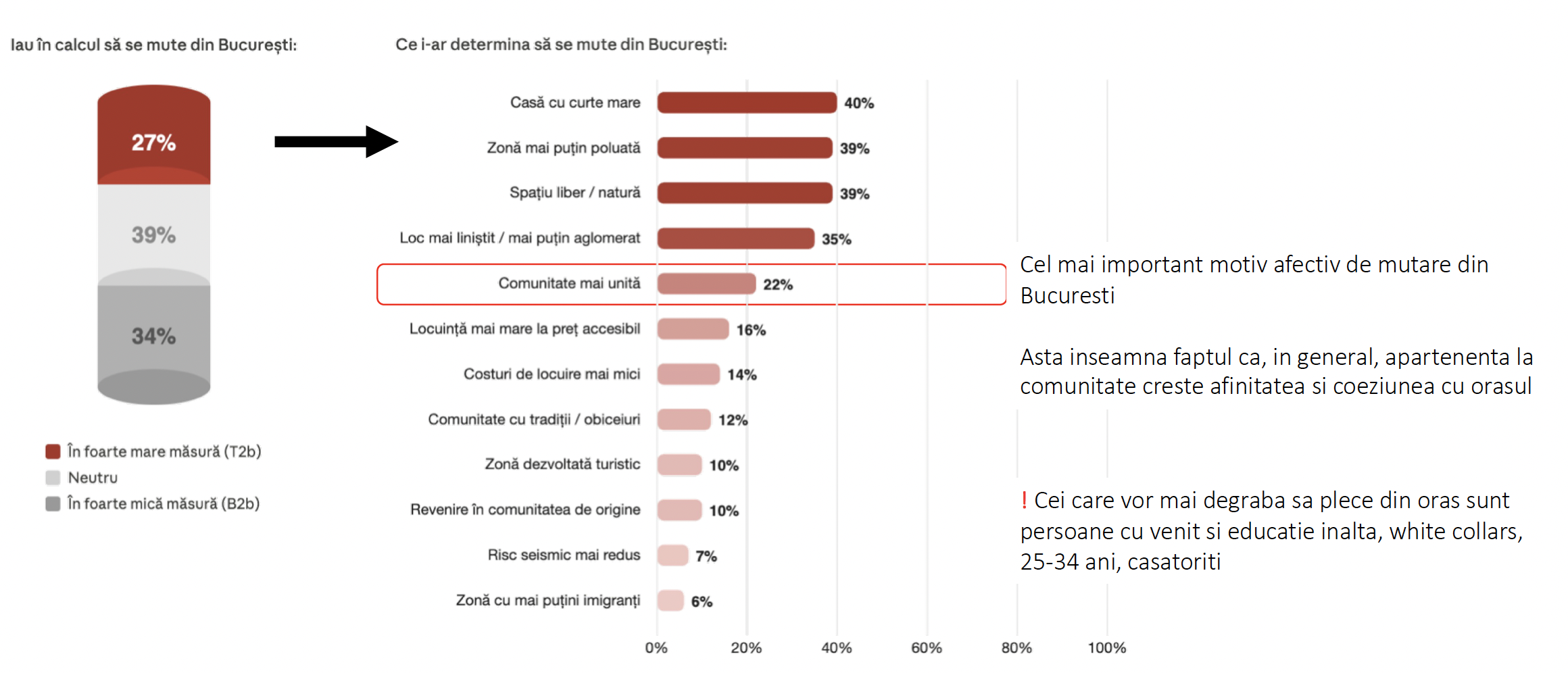
One in three Bucharest residents is considering leaving the city. Their reasons are mainly practical: a house with a garden, somewhere less polluted and crowded, and more nature. Surprisingly, the strongest emotional reason given for leaving is the desire for a more closely connected community. The paradox deepens when we look at those most seriously considering a move: people with high incomes and levels of education, aged between 25 and 34, and often married. In theory, this is precisely the demographic that could contribute most to building a sense of urban community.
The study identifies an important point in these figures: belonging to a community increases people’s affinity with the city. In other words, their dissatisfaction is not with Bucharest as a physical place, but with the absence of a sense of connection to its other residents.
What community really means 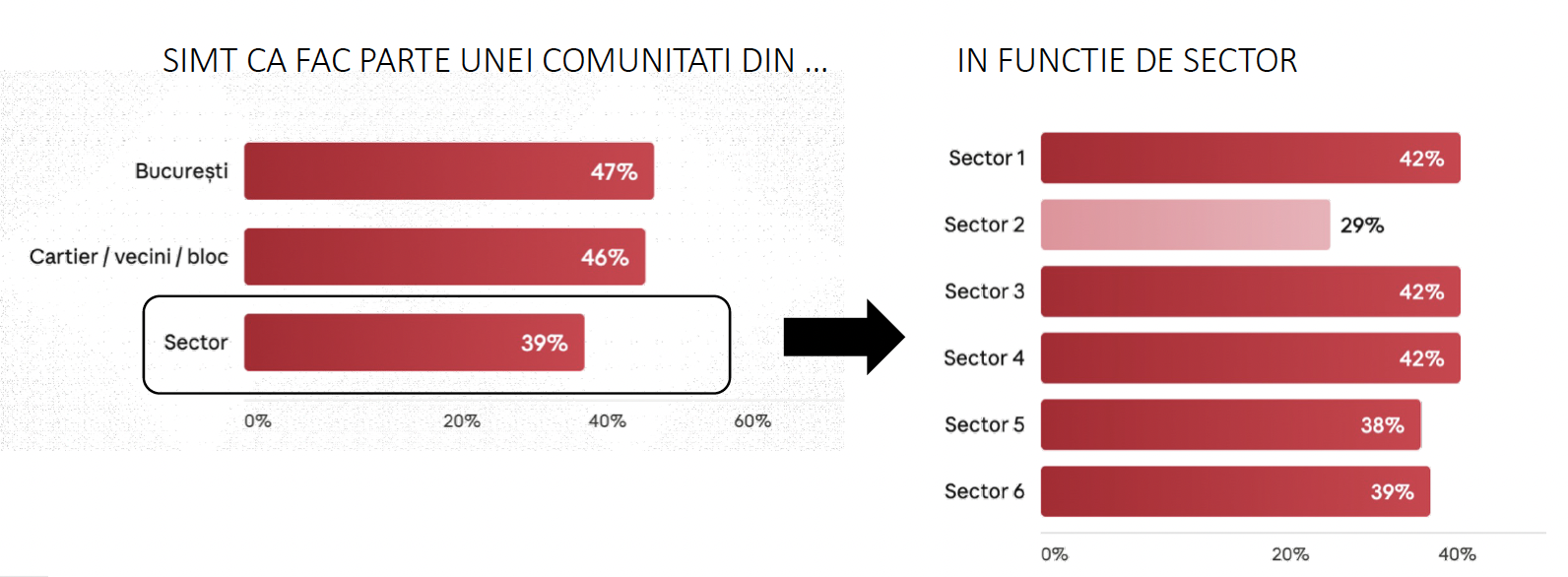
When asked what it means to belong to a community, Bucharest residents answer very quickly. The first things they mention are mutual respect and the feeling that their opinion matters and is heard (57-61% for each). Joint initiatives follow as a consequence of these basic conditions. People cannot do things together without a framework of respect and communication first. This order of priorities matters to anyone seeking to build something at neighbourhood or city level.
People do belong to communities, but these are fragmented and localised. Almost half of respondents belong to building residents’ associations (48%), a quarter to groups formed around shared interests such as cycling, photography or sport, and 22% to parents’ associations. Community membership figures remain below 50%, while 47% of respondents feel part of a community spanning Bucharest as a whole, fewer than those who feel they belong to their neighbourhood or apartment building. For an ordinary Bucharest resident, community means something small and tangible. The city as a whole remains too abstract to generate the same sense of connection.
The perception study on Bucharest’s identity introduces two composite indicators: a Bucharest Belonging Index (7.8 out of 10) and a Social Cohesion Index (6.9 out of 10), which reflect precisely this tension. Belonging is relatively high: people identify with Bucharest, feel proud of it and consider it their own. Cohesion, meaning the feeling of being part of an active, supportive and engaged community, remains lower.
Even more revealing is the profile of those at the opposite ends of these indicators. People with higher education and incomes have a higher belonging index but a lower cohesion index. Older people, those with lower incomes and those born in Bucharest have a stronger sense of cohesion. The implicit conclusion is that community ties do not form automatically with social standing. They need something else: time spent in the same place, repeated interactions and a sense of shared fate.
What could make a difference
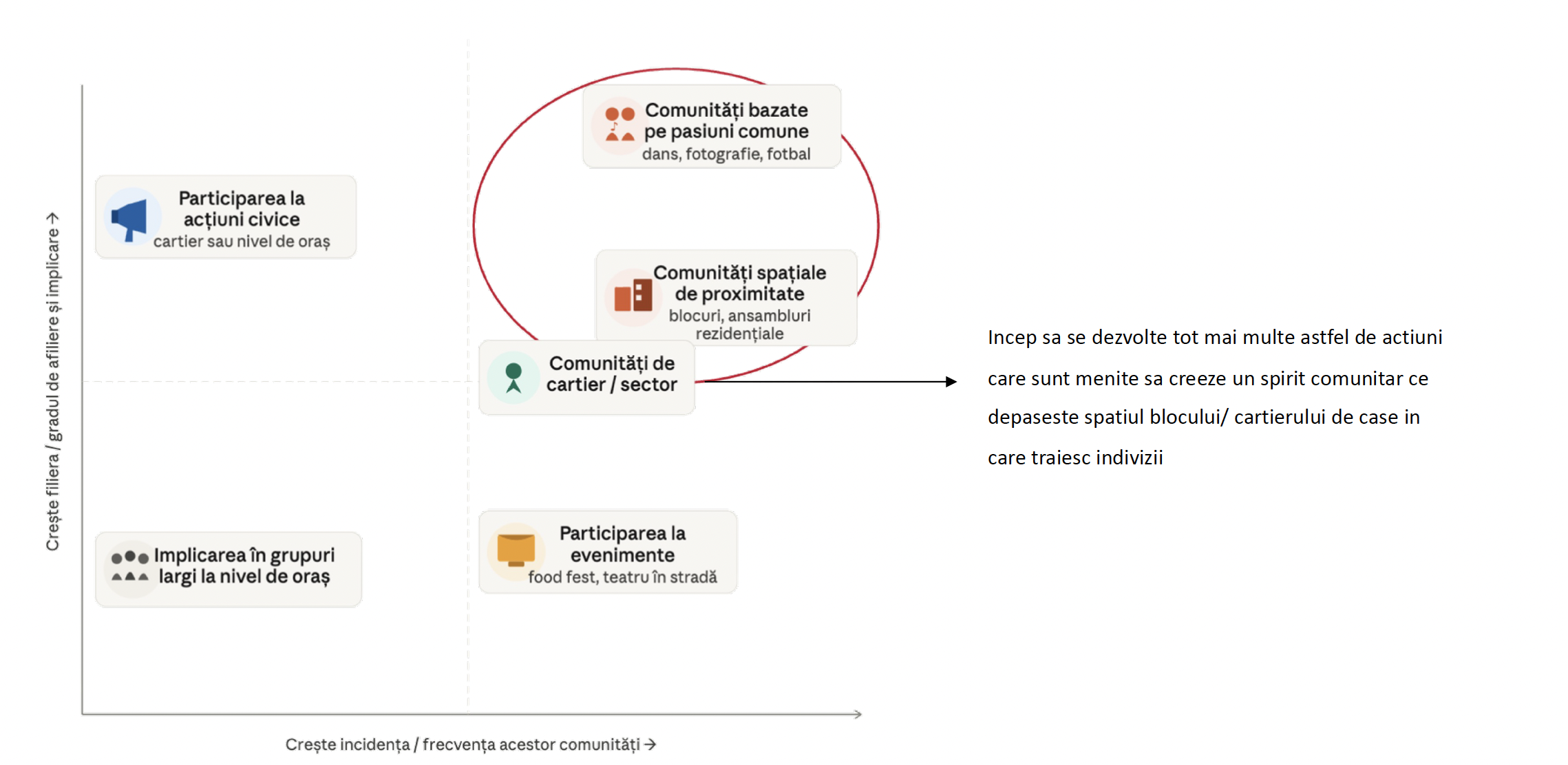
The study finds grounds for cautious optimism in the types of community gaining momentum in Bucharest. Communities based on shared interests, such as dance, photography and sport, and those based on physical proximity, such as apartment buildings and residential developments, have the highest levels of affiliation and involvement. Attending producers’ markets, events in public spaces or open-streets activities in neighbourhoods emerges as the most common form of involvement, with figures ranging from 46 to 51%.
People are curious and willing to get involved, provided the format is accessible and they are not asked for more than they can offer at that moment. Activities work best when they bring neighbourhood residents together around tangible interests such as sport, culture or caring for green spaces, and create opportunities to interact without being excessively formal or ideological.
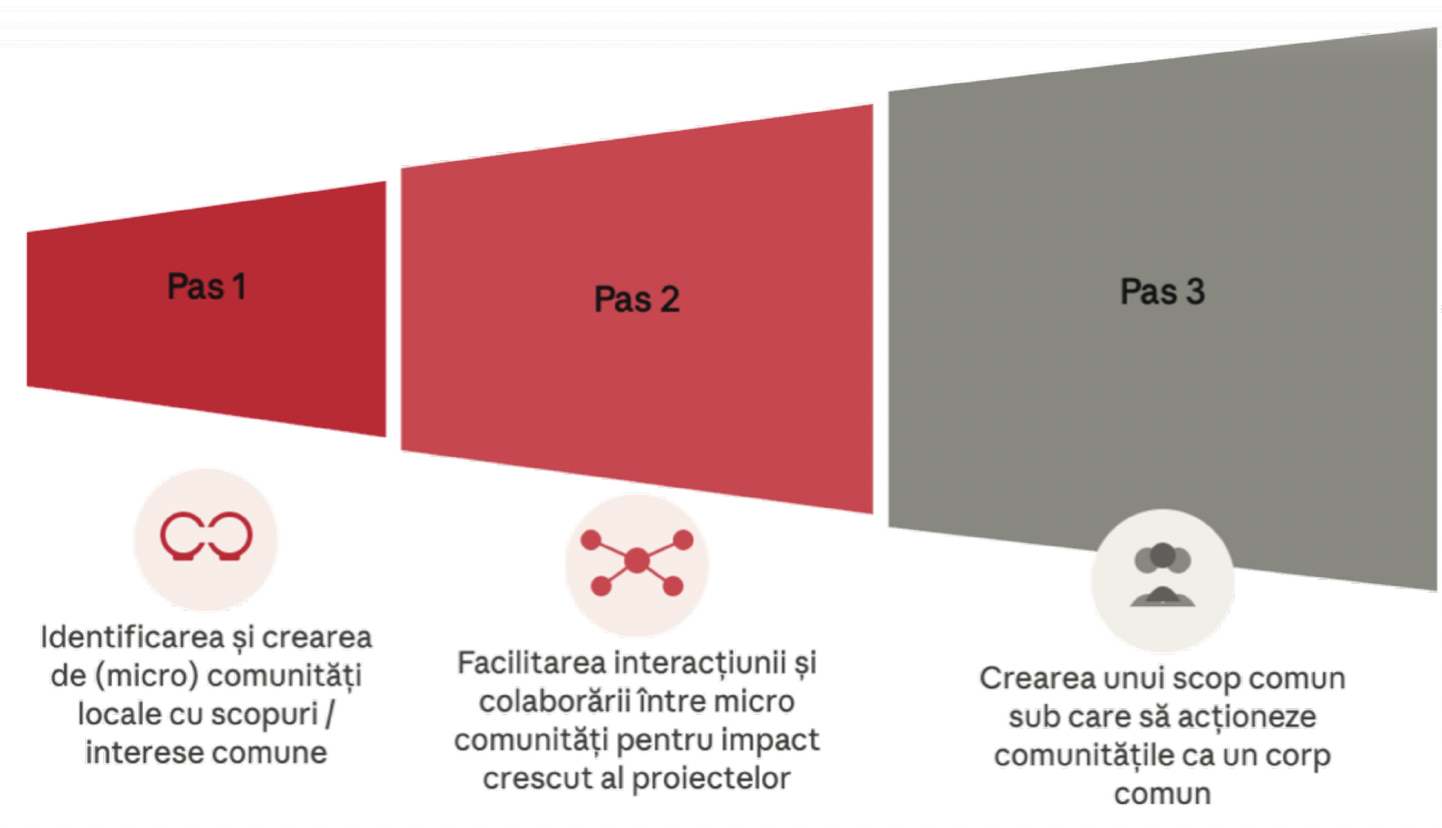
The researchers’ final recommendation follows a simple logic: to build a community at city level, we must first overcome the lack of trust between people. Trust in Bucharest begins with trust between its residents.
The perception study on Bucharest’s identity can be accessed here.