Methodology for involving vulnerable communities in public decision-making
A participatory methodology for involving vulnerable communities in marginalized urban areas in public decision-making, tested in Giulești Cinema Park through workshops, consultations and co-design scenarios.
About the project
Context and contribution
A participatory methodology for involving vulnerable communities in marginalized urban areas in public decision-making, tested in Giulești Cinema Park through workshops, consultations and co-design scenarios.
UrbanVision contribution: Participatory methodology; facilitation; public consultation; spatial scenarios.
A tested ten-step participation framework, grounded in a pilot with more than 560 community responses.
- Location
- Bucharest – Giulești Cinema Park
- Client
- World Bank; Bucharest–Ilfov Regional Development Agency
Team
Urban planner and public consultation studies consultant
Anthropologist and community development studies consultant
Facilitator
- Raluca Boișteanu
Developed with the World Bank and the Bucharest–Ilfov Regional Development Agency, this project tested a participatory methodology for marginalized urban areas. Giulești Cinema Park served as the pilot site for translating New European Bauhaus principles into inclusive planning practice.
The challenge
Participation is essential to sustainable urban planning, yet consultation is not equally accessible to all residents. In vulnerable communities it can remain superficial or be weakened by mistrust in institutions, limited access, negative prior experiences and cultural barriers.
Our approach
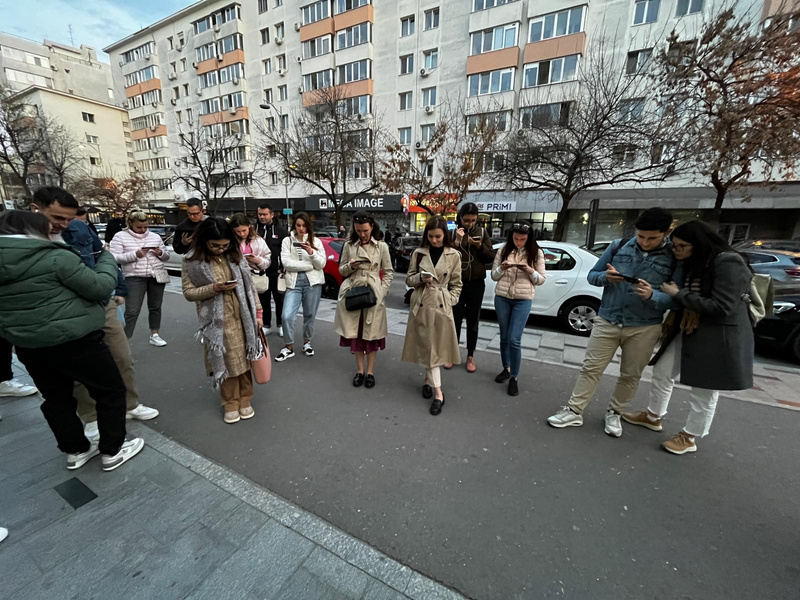
A multidisciplinary team of urban planners, sociologists and community facilitators designed tools that connected the administration with residents. More than 560 people responded to surveys, while illustrated ballots and local workshops allowed residents to vote on park functions and aesthetics. The pilot tested two steps of a broader ten-step methodology for participation throughout the project cycle.
The outcome
The work produced a structured framework for future regeneration and implementation. It demonstrated how democratic, accessible tools can translate real community needs into technical design decisions and strengthen trust, ownership and resilience.